



Blog
At A Touch of Claridy, we are dedicated to helping you achieve your beauty goals while providing you with a rejuvenating experience that transcends traditional skincare. Join us on this journey to unveil your inner and outer radiance. Experience the magic of body and face contouring in the heart of Indianapolis.
Skin Resurfacing Before And After: See Your Transformation
Skin Resurfacing Before And After: See Your Transformation
You catch your reflection in the bathroom mirror under bright overhead light, and suddenly it’s all there at once. The fine lines that seem deeper this year. The acne marks that never fully faded. The redness that shows up before work, before photos, before a night out in Greenwood or downtown Indianapolis. You’ve tried masks, scrubs, serums, and “miracle” creams. Your skin may look a little brighter for a day or two, then settle right back into the same pattern.
That’s usually when people start searching for skin resurfacing before and after photos. They want proof. They want to know what’s real, what’s too aggressive, what’s worth the downtime, and what can help without making sensitive skin angrier.
The hard part is that a lot of online advice skips over the trade-offs. Some treatments create dramatic change but need more recovery. Others are gentler and fit real life better, but they work best as part of a plan. And if you have reactive skin or a deeper skin tone, safety has to be part of the conversation from the start.
Tired of Skin Concerns That Quit? You're Not Alone
A lot of clients don’t come in because they want to look like someone else. They come in because they want their skin to look calmer, smoother, clearer, and more rested. They want to stop feeling distracted by texture, breakouts, old acne scars, or crepey areas that makeup keeps catching on.
That frustration is common across Greenwood, Indiana, and the Indianapolis area. Someone in their thirties may be bothered by lingering post-breakout marks. Someone in their forties may notice a rougher texture and uneven tone. Someone in their fifties or sixties may feel like their skin looks dull even when they’re sleeping well and taking care of themselves.
Good resurfacing doesn’t erase your face. It helps your skin act healthier and look more even, so the change reads as refreshed instead of “done.”
The biggest mistake is assuming every resurfacing treatment is intense. It isn’t. Some approaches focus on controlled renewal with minimal interruption to your week. Others are stronger, with more visible downtime and more strict aftercare. Neither category is automatically right or wrong. The right choice depends on your goals, your skin barrier, your schedule, and your history with pigmentation or sensitivity.
People also worry about making things worse. That concern is valid. Overdoing exfoliation, using the wrong energy-based treatment, or choosing a provider who doesn’t account for skin tone and inflammation can create setbacks.
That’s why before-and-after conversations need context. Photos matter, but so do the method, the timeline, and the safety plan behind them.
What Exactly Is Skin Resurfacing?
Skin resurfacing refers to treatments that improve the skin by prompting a controlled cycle of renewal. Depending on the method, that can mean lifting away damaged surface cells, creating precise micro-injuries that trigger repair, or doing both in a measured way. The goal is healthier-looking skin with better texture, more even tone, softer lines, and less visible scarring.
A clear comparison is wood refinishing. If a table has scratches, staining, and a dull top layer, cleaning it helps only so much. Refinishing changes the condition of the surface itself by removing irregularities and supporting a smoother finish.
Skin responds in a similar way.

Some resurfacing treatments work closer to the surface. Others stimulate repair deeper in the skin while keeping more of the outer layer intact. In both cases, the body shifts into repair mode and builds fresher, more organized tissue over time, including collagen that supports firmness and smoother texture.
That distinction matters for safety as much as results. Sensitive skin, reactive skin, and melanin-rich skin often need a method that improves texture and pigment irregularity without creating unnecessary inflammation. In my experience, the best before-and-after results come from matching the treatment depth to the person in front of you, not from choosing the strongest option available.
At-home exfoliation versus corrective resurfacing
A scrub, exfoliating pad, or retinol can help maintain skin that is already fairly stable. Those products are part of home care. They usually do not do enough to address acne scars, deeper roughness, persistent discoloration, or visible age-related texture changes on their own.
Corrective resurfacing is planned with a wider lens. The treatment choice depends on several factors:
Texture concerns such as acne scarring, enlarged pores, or rough patches
Tone irregularities including post-breakout marks, sun damage, or uneven pigmentation
Skin behavior such as sensitivity, redness, or a history of post-inflammatory hyperpigmentation
Healing tolerance and downtime because a busy schedule, darker skin tone, or a stressed barrier can change the safest option
For clients who want collagen-focused improvement without starting with an aggressive laser, microneedling in Indianapolis is often a smart first step.
Practical rule: If home exfoliation keeps leaving your skin tight, shiny, red, or irritated, the answer is not more intensity. The answer is better treatment selection.
A Guide to Modern Skin Resurfacing Treatments in Indianapolis
If you’re comparing skin resurfacing before and after results, it helps to separate treatments into two broad families. One removes more tissue and usually brings more downtime. The other stimulates renewal with a gentler recovery.
Ablative versus non-ablative options
Ablative resurfacing includes treatments such as CO2 laser resurfacing. These remove part of the skin’s outer layer and create a stronger wound-healing response. They can be very effective for etched lines, significant sun damage, and acne scarring. They also ask more of the skin during healing.
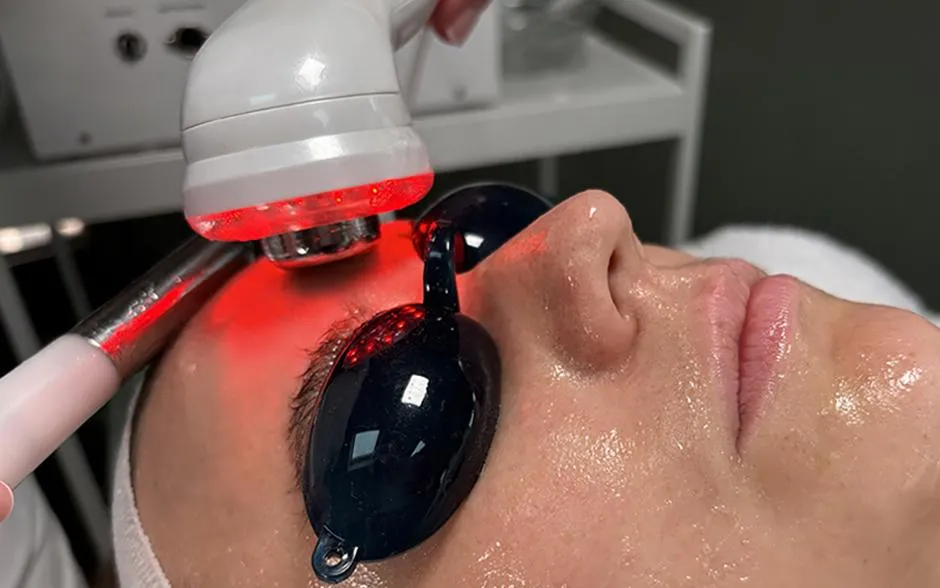
Non-ablative and regenerative resurfacing stimulates change with less visible disruption. This group can include microchanneling, radio frequency, certain peels, LED support, and cold plasma approaches that focus on inflammation control, healing support, and gradual correction.

The difference matters because the “best” treatment on paper may not be the best fit for your life. If you can’t realistically manage visible peeling, redness, strict sun avoidance, and schedule disruption, a milder but well-planned series often works better than one treatment you regret.
One area where laser resurfacing has shown strong results is rosacea-related redness. Laser skin resurfacing can reduce visible blood vessels by 50 to 75 percent after 1 to 3 sessions, with results lasting 3 to 5 years, according to this review of cosmetic laser treatment effectiveness. That doesn’t mean every redness-prone client should start with a laser. It means the mechanism is real, and the treatment choice still has to match skin tolerance.
Skin Resurfacing Options at a Glance
Treatment Best For Downtime Feeling CO2 laser resurfacing Deeper wrinkles, acne scars, major texture change Higher downtime Hot, intense, followed by a healing phase Fractional laser resurfacing Texture, scars, visible aging with a more targeted pattern Moderate downtime Warm to sharp depending on settings Microchanneling Acne marks, texture, fine lines, collagen support Minimal to mild Fast prickling or stamping sensation Cold plasma facial Sensitive skin, acne-prone skin, redness-focused plans Minimal Light warmth or little sensation Radio frequency facial Mild laxity, firmness, contour support Minimal Steady heat Customized resurfacing peel Tone, dullness, early texture issues, glow Mild to moderate Tingling to warm depending on formula
What tends to work best for different concerns
For acne scars and uneven texture, collagen-stimulating treatments usually outperform simple exfoliation. Microchanneling is often a practical middle ground because it creates controlled pathways in the skin and can support visible improvement with less interruption than ablative laser. Treatments such as microchanneling with AnteAGE are used for this collagen-first approach.
For sensitive, inflamed, or acne-prone skin, aggressive resurfacing often backfires if the barrier is already compromised. These clients usually do better when the plan starts with calming inflammation and improving skin resilience. Cold plasma and restorative facials can fit here because the skin needs to tolerate correction before it can benefit from it.
For looser texture and early aging, radio frequency can be useful because it focuses on thermal stimulation below the surface rather than stripping the top layer. It won’t mimic a deep laser result, but it often suits clients who want a natural-looking shift in firmness without social downtime.
For pigmentation concerns, treatment choice depends heavily on skin tone, recent sun exposure, and how reactive the skin is. Given these factors, customization becomes paramount. A peel, microchanneling series, or regenerative treatment may be a smarter option than jumping into a strong device-based procedure.
What usually doesn’t work well is chasing every trend at once. Stacking too many aggressive treatments, over-exfoliating at home, or picking based only on one dramatic photo can delay progress.
Your Transformation Journey Realistic Before and After Results
A client often comes in after seeing a dramatic one-week-after photo online and asks if that is the result to expect. The honest answer is that good resurfacing results rarely happen all at once. They build in phases, and each phase matters.

What before and after really means over time
Right after treatment, skin can look pink, warm, tight, or mildly swollen. That early reaction is normal. It reflects controlled inflammation, not the final cosmetic result.
The first week tells you how the skin is recovering. With lighter treatments, clients usually see brief redness followed by a fresher, smoother look. With stronger resurfacing, the skin may darken, feel rough, peel, or develop a temporary sandpapery texture before it clears.
The next change is usually texture.
Around the following few weeks, many clients notice that makeup applies more evenly, dry rough patches catch less light, and congested areas look calmer. Fine lines and shallow acne marks may start to soften here. Deeper scars, etched lines, and laxity usually take longer because collagen remodeling is slower than surface shedding.
That delayed timeline matters. Stronger resurfacing methods, especially ablative laser, can continue improving skin for months after the appointment as deeper repair unfolds. An early photo can be useful, but it does not tell the whole story.
A good result should look like healthier, stronger skin with a smoother surface and more even tone.
Here’s a helpful visual explanation of that progression:
If you want a clearer sense of what that timeline feels like in real life, client reviews that describe healing and visible progress are often more useful than polished social media photos taken under ideal lighting.
Why diverse skin results matter
Before-and-after galleries can be misleading when they only show fair, resilient skin. That leaves out many of the clients I see in Greenwood and Indianapolis, including people with sensitive skin, melanin-rich skin, acne-related discoloration, or a history of post-inflammatory hyperpigmentation.
Skin tone changes the safety conversation. The American Society for Dermatologic Surgery notes that laser resurfacing must be selected carefully in darker skin types because pigment changes are a known risk, especially with more aggressive settings and poor treatment matching. If a provider cannot show results on skin that looks like yours, the gallery is incomplete.
This is one reason I often guide clients toward less invasive resurfacing first. Cold plasma, microchanneling, targeted peels, and barrier-supportive corrective treatments can produce meaningful before-and-after changes with less risk of triggering rebound pigmentation or prolonged irritation. That approach is not about settling for less. It is about choosing a method your skin can heal from predictably.
The strongest before-and-after result is not always the fastest or most aggressive one. It is the one that improves texture, tone, and clarity while keeping the skin calm, intact, and safe across the full healing period.
Your Roadmap to Success Preparation and Aftercare
You book a resurfacing treatment because you want smoother, clearer skin. The result you get depends just as much on the two weeks around the appointment as it does on the device, peel, or technique used in the room.
I tell clients this often because I see the same pattern across gentle treatments and stronger ones alike. Good preparation lowers the chance of irritation. Careful aftercare helps the skin heal evenly, hold onto brightness, and avoid setbacks like prolonged redness or post-inflammatory hyperpigmentation. That matters for every skin tone, and it matters even more for sensitive skin and darker tones that can react strongly to excess heat or inflammation.
The consultation shapes the outcome
A useful consultation goes beyond the concern you want to fix. It should cover skin tone, barrier health, recent sun exposure, active acne, medications, history of cold sores, past reactions, and how much recovery time suits your life.
Those details change the plan.
A client with mild texture and strong barrier function may do well with a more corrective series. A client with melanin-rich skin, reactivity, or recent irritation often gets better long-term results by starting with lower-inflammation options and building gradually. In practice, that slower route often produces a cleaner before-and-after because the skin stays calmer throughout the process.
Clear expectations matter too. Acne scars, redness, and uneven pigment rarely resolve on the same timeline. If you expect one session to fix all three, you are more likely to feel disappointed even when the skin is improving exactly as expected.
What to do before treatment
Preparation varies by treatment, but the goal stays the same. Keep the skin stable before you challenge it.
Keep your routine simple: Avoid adding scrubs, strong acids, retinoids, or at-home devices right before your appointment unless your provider specifically tells you to use them.
Limit sun exposure: Tanned, overheated, or inflamed skin is harder to treat safely and can heal unpredictably.
Report your history fully: Cold sores, allergies, easy pigment changes, recent waxing, injectables, antibiotics, and isotretinoin history all affect timing and treatment choice.
Use the prep plan you were given: If your provider adjusts cleanser, moisturizer, pigment support, or antiviral medication, follow that plan closely.

How to protect your results afterward
Freshly resurfaced skin is more vulnerable to heat, friction, picking, and UV exposure. The stronger the treatment, the more disciplined aftercare needs to be. Even with no-downtime options, careless recovery can leave the skin dry, blotchy, or slower to improve.
Sun protection is required. If you resurface the skin and then get careless with UV exposure, you can trigger new discoloration and blunt the result you worked for.
The basics are straightforward:
Use only approved healing products: Gentle cleanser, barrier-supportive moisturizer, and sunscreen are usually the core routine early on.
Do not pick or scrub: Flaking skin needs time to release on its own. Rubbing it off can leave marks and prolong redness.
Pause strong actives: Retinoids, exfoliating acids, benzoyl peroxide, and other high-stimulation products often need to wait until the skin has recovered.
Respect heat and activity limits: Depending on the treatment, you may need to avoid hot workouts, steam, pools, or makeup for a short period.
Keep follow-up appointments: Small adjustments after the first treatment can make a big difference in both comfort and final results.
This is one area where non-invasive resurfacing has a real advantage. Treatments like cold plasma, microchanneling, and carefully chosen peels often give clients visible improvement with fewer aftercare restrictions than aggressive laser resurfacing. That does not mean they are casual treatments. It means the healing period is often easier to manage, especially for clients in Greenwood and Indianapolis who want meaningful change without stepping away from work, family, or daily life for an extended recovery.
The best before-and-after results usually come from patients who treat resurfacing as a process. They prepare the skin, protect it during healing, and give it enough time to respond.
Your Questions Answered and Your Next Step to Radiant Skin
Clear answers make treatment decisions easier, especially if you’re new to corrective skincare.
Frequently asked questions
Does skin resurfacing hurt?
It depends on the method. Gentle resurfacing often feels warm, prickly, or mildly tingly. More aggressive options feel more intense and usually involve a more demanding recovery.
How many sessions will I need?
That depends on your concern and the treatment type. Mild texture and dullness may respond to a shorter plan. Acne scars, redness, and long-standing uneven tone usually do better with a series and maintenance.
Will I peel?
Sometimes. With non-invasive options, you may have little to no visible peeling. With stronger resurfacing, peeling can be part of the normal healing process.
Is there a good option for sensitive skin?
Usually, yes. Sensitive skin often needs a slower start, less inflammation, and more barrier support. That’s one reason treatment selection matters more than hype.
What if I have darker skin or a history of hyperpigmentation?
You need a provider who considers pigment risk from the beginning. That often means choosing a more conservative or regenerative approach first instead of forcing an aggressive laser plan.
Is skin resurfacing affordable?
Cost depends on the modality and the number of sessions in your plan. Many clients do best when they think in terms of value over time, not just one appointment. Payment plans can also make a corrective series more manageable.
If you’ve been comparing skin resurfacing before and after photos and still feel unsure, that’s normal. The right answer usually isn’t the most dramatic photo. It’s the treatment path that fits your skin, your goals, and your ability to care for the result properly.
Meta title: Skin Resurfacing Before and After in Greenwood, IN | Corrective Skincare Guide
Meta description: Explore skin resurfacing before and after results, treatment options, downtime, and aftercare for clients in Greenwood and Indianapolis. Learn how to choose the right resurfacing plan for your skin.
Internal linking suggestions:
If you’re ready for a personalized plan instead of guesswork, book a consultation with A Touch of Claridy. Clara D-Smith and her Greenwood studio focus on corrective, non-invasive skincare for clients throughout Greenwood, Indianapolis, and nearby communities who want visible change with a thoughtful approach to skin health.


At A Touch of Claridy, skincare is rooted in a holistic belief that skin can regenerate, renew, and thrive at any age when supported with the right technology and care.
Company
Legal
Contact Us
Copyright 2026. A Touch of Claridy. All Rights Reserved.