




A Touch of Claridy
Discover Radiant Beauty at A Touch of Claridy Indianapolis
PRP vs Microneedling in Greenwood, IN | How to Choose the Right Treatment
PRP vs Microneedling: Your Best Skin Choice
You’re probably here because you’ve narrowed your options down to two names you keep seeing everywhere: PRP and microneedling with AnteAGE.
Maybe you want smoother skin, softer acne scars, better texture, help with early hair thinning, or a fresher look without injectables or surgery. Then the next question hits. Which one makes sense for your skin, your budget, and your goals?
That’s where people often get stuck.
A lot of content around prp vs microneedling with AnteAGE makes the decision sound too simple. In real practice, it isn’t. The better choice depends on what you’re treating, how aggressive you want to be, what kind of downtime you can handle, and whether your skin needs mechanical collagen stimulation, added growth factors, or a more advanced option altogether.
For many clients in Greenwood, Indiana and the Indianapolis area, the best answer isn’t picking a trend. It’s building the right corrective skincare plan. If you’re also comparing treatment options with professional facials, this overview of facials in Indianapolis can help you see where regenerative services fit into a full skin strategy.
Navigating Your Skin Rejuvenation Options
A client sits down in my treatment room and says, “I’m not trying to do everything. I just want to choose the treatment that makes sense for my skin.”
That is the right place to start.
People rarely ask for collagen induction or platelet-rich plasma by name. They ask for smoother texture, softer acne scars, healthier-looking skin without makeup, or support for thinning hair before it progresses. The primary consideration is not PRP versus microneedling as a trend comparison. Instead, it is how each option fits into a personalized treatment plan.
The real crossroads clients face
At A Touch of Claridy, I see very different goals under the same question. One client wants help with early fine lines and rough texture. Another is focused on acne scars that still show in certain lighting. Someone else is worried about hair density and wants to know whether a scalp-focused regenerative treatment is worth the added cost.
Those cases should not get the same recommendation.
Standard microneedling is often a strong starting point for texture, mild scarring, and collagen support when budget matters. PRP can be a better fit when we want to add your body’s own growth factors to the plan and support a stronger healing response. In some cases, the better answer is neither of those alone. Advanced options such as AnteAGE Microchanneling, which is what A Touch of Claridy offers affordably, may make more sense when the goal is controlled rejuvenation with targeted growth factor support and a treatment path that can be adjusted over time. AnteAge uses growth factors and cytokines from a reliable source, and is certified safe for pregnant women, nursing mothers and oncology patients.
Clients also compare these services with other skin-maintenance options. For some concerns, corrective treatments belong alongside a routine of professional facials in Indianapolis, not in place of one.
Practical rule: The best treatment is the one that fits your concern, skin history, tolerance for downtime, and budget.
Why this choice matters
Poor treatment choices usually lead to one of two outcomes. Clients spend more than they needed to, or they choose the lower-commitment option and expect results it was never designed to deliver.
I tell clients to look at three things before deciding:
Your actual concern: Acne scars, early aging, uneven texture, and hair thinning respond differently.
Your tolerance for commitment: Some plans need a series, maintenance, or combination care.
Your skin’s behavior: Sensitive skin, slower healing, inflammation, and past treatment history all affect what makes sense.
Good skin rejuvenation is not about picking the most talked-about treatment. It is about choosing the right starting point, then adjusting the plan as your skin responds. That is how we get honest results in Greenwood and throughout the Indianapolis area.
Understanding How Each Treatment Works
Microneedling and PRP both support regeneration, but they do it in different ways. That difference is why they can perform very differently depending on the goal.

Microneedling and the collagen response
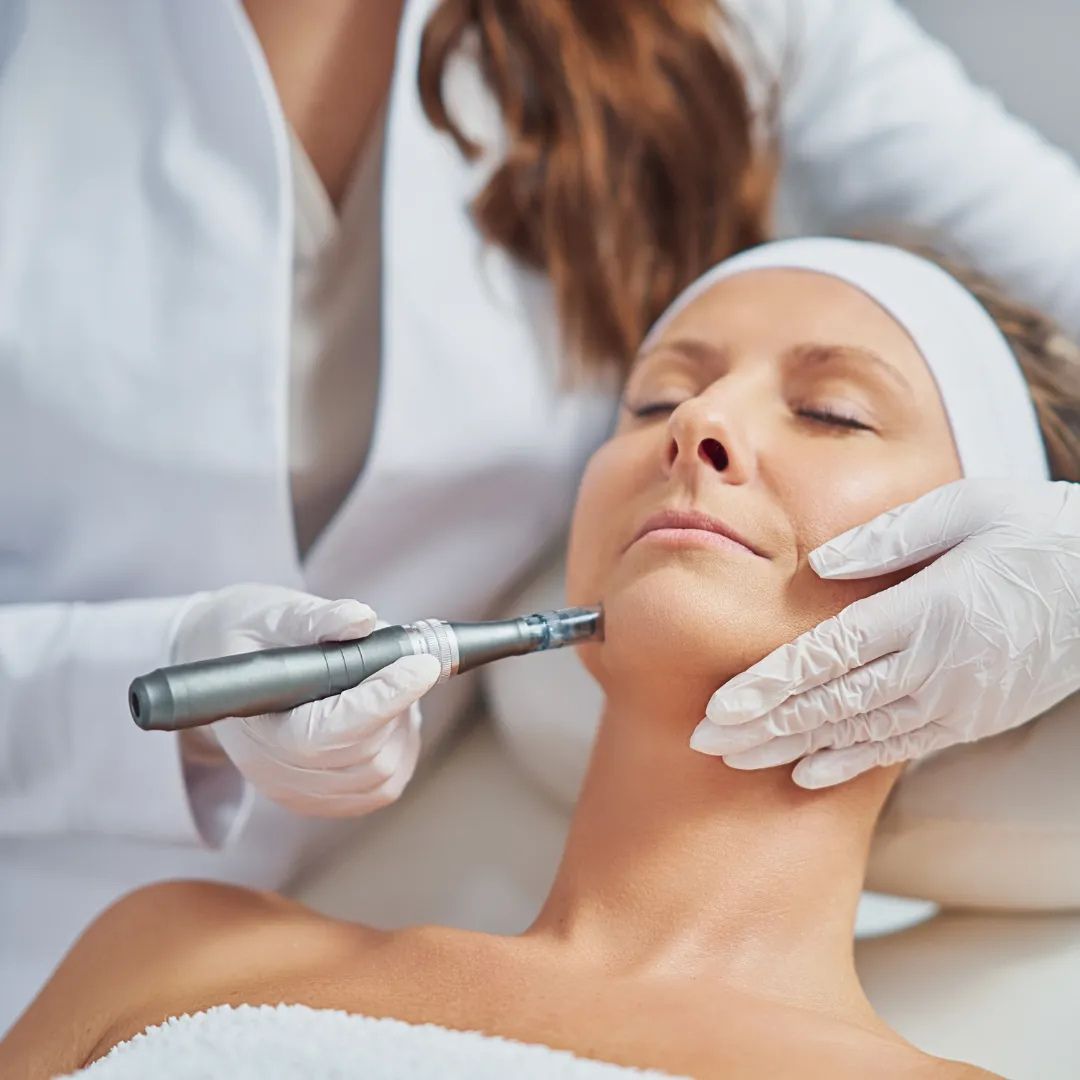
Microneedling creates controlled micro-injuries in the skin. I often explain it like aerating a lawn. You’re creating tiny channels that tell the skin to start repairing itself.
That repair response is the point. Skin begins rebuilding with fresh collagen activity, which is why microneedling is widely used for texture, fine lines, pores, and certain types of scars.
It’s a versatile treatment because depth and technique can be adjusted based on the concern. It also fits well into corrective skincare plans because it works with the body’s own healing response instead of forcing an artificial result.
Clinical protocols are fairly established. Microneedling typically requires 3 to 6 sessions every 4 weeks, while combination treatment usually involves 3 to 4 sessions spaced 4 to 6 weeks apart, according to this review of microneedling and PRP treatment protocols.
If you’re comparing professional options in the Indianapolis area, this page on microneedling in Indianapolis gives added context on how these treatments are used in practice.
PRP and growth factor support
Platelet-rich plasma, or PRP, starts with your own blood. The blood is processed so the platelet-rich portion can be used as a concentrated regenerative component. Your stem cells' wound healing ability can vary based off of age.
If microneedling is the signal that tells the skin to repair, PRP acts more like a super-fertilizer added to that process. It delivers growth factors that support tissue repair and collagen remodeling.
That’s why PRP often enters the conversation when a client wants more than texture improvement. It can be a strong option when the focus is overall skin quality, elasticity, and healing support.
PRP doesn’t replace the mechanical stimulus of microneedling. It adds a biological layer to it.
For skin rejuvenation, randomized controlled research cited in the protocol review above found that PRP facials provide superior improvements in skin hydration, elasticity, and overall texture compared with microneedling alone. In practice, that usually matters most for clients who want a stronger glow, more support for skin quality, and a plan that leans regenerative rather than basic.
PRP vs Microneedling A Direct Comparison
Here’s the side-by-side look often desired first.

Quick comparison table
Factor Microneedling PRP or PRP-enhanced treatment Core action Creates controlled micro-injury to trigger collagen remodeling Adds concentrated platelet-derived growth factors to support repair Best known for Texture, pores, fine lines, and certain scars Skin quality support, elasticity, hydration, healing support Treatment series Often done in a series based on skin goals Often done in a series, especially when paired with microneedling Recovery profile Temporary redness is common May add swelling or bruising depending on technique Budget Usually more accessible Usually costs more because of blood processing and application method Hair restoration value Often highly cost-effective Can be valuable, but cost is a bigger factor Who may prefer it Clients starting corrective treatment or focusing on texture Clients wanting a more regenerative approach
What stands out in real decision-making
For acne scarring, microneedling has a solid role on its own, but the combination can outperform simpler pairings in the right case. In a split-face clinical study on atrophic acne scars, microneedling combined with PRP showed superior efficacy over microneedling with vitamin C, especially for boxcar and rolling scars, with fibroblast activity up to 30% higher than standalone microneedling and statistically significant reductions in scar depth (p<0.05), as summarized here in the acne scar comparison review.
That sounds impressive, but context matters.
For someone mainly bothered by enlarged pores, early texture changes, or mild superficial acne marking, microneedling alone may be enough. For someone with more pronounced atrophic scarring, adding regenerative support can be worth the extra investment.
Here’s the practical breakdown I use:
If cost is a priority: Microneedling with AnteAGE usually wins as the entry point.
If scar revision is the focus: PRP-enhanced treatment may justify the upgrade.
If you want an advanced regenerative route: treatments such as AnteAGE microchanneling may fit better than a simple A-versus-B comparison.
If expectations are vague: a consultation matters more than the treatment name.
Better isn’t universal. Better means better matched.
Best Uses for Microneedling and PRP
A client sits in my treatment room frustrated because she has heard that PRP is "better," but her actual concerns are enlarged pores, a few acne marks, and early loss of firmness. Another client comes in with deeper acne scarring or thinning hair and needs a different conversation entirely. That is why prp vs microneedling with AnteAGE should not be treated like a simple winner-loser comparison. The better choice depends on what you want to change, how aggressive the plan should be, and whether a more advanced option belongs in the discussion.

Skin aging and texture concerns
Microneedling is often the cleaner starting point for early skin aging.
It works well for rough texture, mild crepiness, visible pores, and fine lines that come from gradual collagen loss rather than major tissue breakdown. For many clients, that is enough to begin getting smoother, stronger-looking skin without adding the cost and extra steps of PRP.
PRP fits a narrower group better. I consider it when the goal is not only texture correction, but also stronger support for overall skin quality during healing. Some clients want that added regenerative component because they are targeting dullness, thinner skin, or a tired look that goes beyond surface irregularity. In our practice, this is also where we may discuss whether an advanced regenerative treatment such as AnteAGE Microchanneling makes more sense than forcing the choice into standard microneedling versus PRP.
Acne scars and realistic expectations
Scar type matters more than treatment hype.
Microneedling-based treatments usually make the most sense for broad atrophic scarring patterns and texture irregularity. They are less predictable for very narrow, deep scars. A review in Clinical, Cosmetic and Investigational Dermatology notes that ice pick scars generally respond poorly to needling alone and often require other techniques such as chemical reconstruction or punch-based procedures, as outlined in this acne scar treatment review.
That distinction matters in the treatment room. If a scar is sharply defined and extends deep into the skin, collagen stimulation may soften the area but not fully correct it. In those cases, I would rather set honest expectations and build a combination plan than promise more than the skin can deliver.
Hair restoration and value
Hair restoration changes the conversation because results, budget, and treatment burden all matter at the same time.
A study published through the NIH found that microneedling with PRP improved androgenetic alopecia by investigator assessment at 6 months compared with topical minoxidil alone, and PRP studies in the same paper reported increases in hair density. That same review also noted that microneedling alone performed nearly as well as microneedling with PRP in some comparisons, which is why cost deserves a direct discussion, not a footnote. Session pricing in the hair restoration comparison and cost review shows a real gap between professional PRP treatment and microneedling options.
For clients in Greenwood, that often makes microneedling a practical entry point for hair thinning, while PRP may be reserved for cases where the added investment matches the goal and the treatment plan.
How to Choose the Right Treatment for You
A client usually sits down with one main question. “What will make the biggest difference for my skin without overdoing it?” That is the right question to ask.
At A Touch of Claridy, I do not treat this as a simple PRP versus microneedling decision. I look at the full picture first. Your skin history, downtime tolerance, budget, sensitivity, and long-term goals all shape the recommendation. Sometimes standard microneedling is the smart place to start. Sometimes PRP makes sense. Sometimes the better fit is a more advanced regenerative option that is not part of the usual online comparison.
Choose microneedling if
Microneedling is often a strong starting point when the goal is steady correction without adding the cost and extra steps of PRP.
It usually fits best if:
You want to improve texture: Fine lines, roughness, enlarged pores, and early unevenness often respond well to a series.
You want a lower-cost entry point: You can still get meaningful collagen stimulation without layering on blood processing.
You prefer to build results in stages: We can start with microneedling, watch how your skin responds, and adjust the plan from there.
Your concerns are mild to moderate: Early aging changes and lighter textural issues do not always need the most intensive option first.
For many first-time clients, that is a practical and honest place to begin.
Choose microneedling with AnteAGE treatment if
Microneedling treatment can be a better fit when the skin needs more support during the repair process, or when the goal is broader rejuvenation. As age plays a role, it's safer to use a controlled medium, like AnteAge MD since it offers a more consistent, potent concentration of anti-inflammatory bone marrow stem cell growth factors without the need for blood draw.
It may make more sense if:
You want added regenerative support: Microneedling with AnteAGE is often chosen by clients who want to pair collagen stimulation with growth factors from a more consistent, potent source vs. their own blood (which can not have the same effective wound-healing power due to age).
You are focused on overall skin quality: This can be a good choice when elasticity, tone, and a more refreshed look matter as much as texture.
You are treating select atrophic scars: Some scar patterns respond better to a more layered approach than microneedling alone without any growth factor solution, vs when only hyaluronic acid is used.
Scar type matters here.
If scars are narrow, deep, and sharply punched into the skin, I set careful expectations. As noted earlier, ice pick scars often need a different strategy or a combination plan that goes beyond collagen stimulation alone. In that situation, choosing the “stronger” option on paper does not always produce the best real-world result.
A good consultation should leave you with a clear reason for the recommendation. It should also include the limits of that recommendation. Sometimes the best answer is microneedling. Sometimes it is PRP. Sometimes we step outside that standard comparison and choose a more personalized regenerative treatment that better fits your skin.
The A Touch of Claridy Difference in Greenwood
Clients in Greenwood and the Indianapolis area don’t just need a menu of treatments. They need someone who can sort through what actually fits their skin.
That’s where an advanced esthetics practice stands apart. The conversation doesn’t stop at PRP or standard microneedling. Sometimes the better answer is a more refined regenerative option.

Why advanced options matter
One of the biggest gaps in online treatment comparisons is that they stop at the basic matchup.
In real corrective skincare, there are cases where advanced microchanneling systems and targeted formulations make more sense, especially for sensitive skin, pigmentation concerns, or clients who want a regenerative approach with a different recovery profile.
A future-facing projection in practitioner reporting states that emerging 2026 insights show a trend of combining microneedling with advanced devices or formulations such as AnteAGE microchanneling, which can reduce hyperpigmentation by 30 to 50% more than solo microneedling, according to this article discussing pigmentation-focused regenerative options. Because that source presents it as emerging practitioner insight, it should be read as directional rather than settled long-term consensus.
A personalized approach for Greenwood and Indianapolis clients
At A Touch of Claridy, treatment planning is built around skin behavior, not one-size-fits-all packages.
That matters if you’re dealing with:
Sensitive or reactive skin: Aggressive treatment isn’t always the smartest treatment.
Pigmentation concerns: Delivery method and formulation matter.
Acne scarring: Scar type changes the recommendation.
Age management goals: Long-term skin health usually responds best to a layered strategy.
For some clients, classic microneedling is the right answer. For others, PRP-enhanced work fits better. And for others, AnteAGE Microchanneling may be the more thoughtful option because it supports regeneration in a way that aligns better with the skin in front of us.
The strongest skincare plan isn’t the most expensive one. It’s the one built honestly.
Frequently Asked Questions
Does microneedling hurt?
Most clients describe both as tolerable rather than unbearable. Numbing is used. This helps with the discomfort.
Microneedling often feels scratchy or intense in thinner areas. PRP-based treatment can add discomfort depending on whether it’s applied topically after needling or used through injections. Numbing support and technique make a big difference.
How long do results last?
Neither treatment should be viewed as one-and-done.
Skin keeps aging, collagen remodels gradually, and maintenance matters. Protocols commonly use a series first, then occasional upkeep. For skin rejuvenation protocols, microneedling is commonly performed in 3 to 6 sessions, and maintenance is often spaced out over time, while combination treatment may allow a longer interval between maintenance visits, as noted earlier in the treatment protocol review.
Can I just use an at-home roller?
You can, but that doesn’t make it equivalent to a professional treatment.
At-home devices are limited in precision, sanitation, depth control, and treatment planning. They also don’t replace a professional evaluation of whether your issue is texture, pigment, scar tethering, inflammation, or something else. For hair concerns, home tools may look cheaper on paper, but they don’t provide the same level of guided care.
Is PRP always better than microneedling?
No.
PRP can be a strong addition, but “better” depends on the condition being treated. PRP can be costly, microneedling with AnteAGE can be a better, more affordable solution. For some skin goals, microneedling alone is enough. For some hair restoration cases, the added cost of PRP may not deliver enough extra value to justify it. For certain deep acne scar types, neither option should be oversold.
What if I’m not sure which category I fit into?
That’s normal.
Many do not know whether their scars are rolling or ice pick, or whether their redness is sensitivity, inflammation, or post-acne change. A good consultation should identify the issue first, then choose the treatment second.
Internal linking suggestions for this topic cluster
Link to a service page on microneedling for texture, scars, and anti-aging
Link to a page focused on hair restoration options
Link to a blog post about acne scar types and which treatments work best
Link to a page or article on AnteAGE Microchanneling for sensitive or pigmentation-prone skin
Link to a corrective facial page for clients who need barrier repair before advanced treatments
If you’re in Greenwood, Indiana or the Indianapolis area and want honest guidance on prp vs microneedling, book a consultation with A Touch of Claridy. We’ll look at your skin, talk through your goals, and build a treatment plan that fits your real concerns, whether that’s acne scarring, anti-aging, pigmentation, or hair restoration.


Licensed esthetician
Clara D-Smith
About Clara
Let me introduce myself if you don't know me, I'm Clara. Wife, mom, aesthetician, makeup artist (special Occasion and permanent), and business owner.
Married to a wonderful man named Michael whose blessed me with three beautiful children! Elijah, Micaiah and Eliana. Yes busy, but joyfully loving Life...in abundance.
Always being attracted to beauty and color, I love anything that allows me to be creative, help others and shine! So, let me help YOU shine with almost 20 years of experience in beauty, skincare, makeup and anything I like to "touch".
#atouchofclaridy
of Indianapolis is here for you!
Contact Us
We'd Love To Hear From You

Copyright 2025 A Touch of Claridy