



Blog
At A Touch of Claridy, we are dedicated to helping you achieve your beauty goals while providing you with a rejuvenating experience that transcends traditional skincare. Join us on this journey to unveil your inner and outer radiance. Experience the magic of body and face contouring in the heart of Indianapolis.
10 Best Treatments for Sagging Skin (2026 Guide)
10 Best Treatments for Sagging Skin (2026 Guide)
Reclaim Your Radiance: A Guide to Firmer Skin in Greenwood, IN
When you look in the mirror, do you see the vibrant person you feel like inside, or is a loss of firmness and elasticity starting to tell a different story? A lot of people assume their only real options are injectables or surgery. That gap in thinking causes many clients to overlook effective, non-invasive treatments that can improve sagging skin gradually and naturally.
In the Greenwood and greater Indianapolis area, more people are choosing corrective skincare that works with the skin instead of forcing a dramatic change overnight. The best results usually come from collagen support, improved circulation, muscle stimulation, and consistent home care. That’s why the best treatments for sagging skin often aren’t one single service. They’re part of a strategic plan.
As a seasoned esthetician would tell you, not every lifting treatment does the same job. Some tighten because they stimulate collagen. Some improve tone by working with facial muscles. Some smooth the surface so skin looks firmer even before deeper remodeling catches up. The difference matters, especially if you want natural-looking improvement with little downtime.
At A Touch of Claridy in Greenwood, Indiana, that personalized approach is central to corrective skincare. If you’re searching for skin tightening in Greenwood, non-invasive anti-aging treatments near Indianapolis, or a practical guide to firmer skin without surgery, this list will help you sort out what works, what each treatment is best for, and where the trade-offs are.
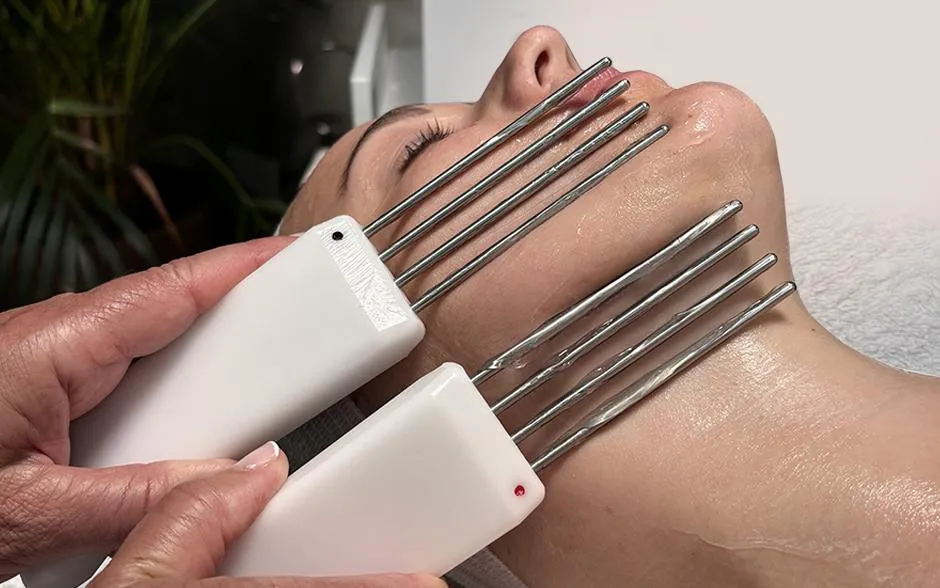
1. Microcurrent Facial Therapy NeurotriS Technology
If sagging shows up as facial heaviness, softened contours, or a tired look around the cheeks and jawline, microcurrent is one of the smartest places to start. It’s especially useful for clients who want visible lift without redness, peeling, or recovery time.
NeurotriS microcurrent uses low-level electrical current to support facial muscle activity and improve the way skin and underlying tissues perform. In practice, that often means better tone, better circulation, and a more sculpted look. This is why many people call it a non-surgical facelift, even though the effect is more subtle and cumulative than surgery.

Microcurrent works best when skin also needs tone
Microcurrent doesn’t remove loose skin, and that’s an important distinction. It’s best for early to moderate laxity, facial asymmetry, or skin that has started to look less supported. I’d also put it high on the list for prevention, especially for clients in their 30s and 40s who want to stay ahead of deeper sagging.
A few practical truths make a difference:
Consistency matters: One treatment can give a refreshed look, but a series is what creates more lasting improvement.
Hydration helps performance: Well-hydrated skin conducts treatment better and usually responds more comfortably.
Combination care works better: Pairing microcurrent with LED or corrective facials often gives a more complete result than relying on muscle stimulation alone.
Practical rule: Choose microcurrent when your face looks tired or slightly dropped, not when you need major skin contraction.
In a Greenwood skincare setting, this is a strong option for busy clients who want anti-aging support with no downtime. It’s also a good fit before events, since skin typically looks more lifted and awake right away. At A Touch of Claridy, microcurrent makes the most sense as part of an ongoing skin fitness plan rather than a one-and-done fix.
2. Cold Plasma Facial Treatment
Cold plasma is one of the more interesting options in advanced esthetics because it can improve firmness without relying on aggressive heat. For clients with sensitive, reactive, or inflamed skin, that matters.
This treatment uses ionized gas energy at the skin’s surface to encourage repair, support collagen remodeling, and improve overall skin quality. The result isn’t just about lift. Skin often looks clearer, calmer, and more refined as well, which can make laxity less noticeable.
Where cold plasma fits
Cold plasma is a good choice when sagging is mild but skin also has texture issues, dullness, or post-breakout unevenness. It gives a different kind of improvement than radiofrequency. Instead of a heat-driven tightening feel, it supports regeneration in a gentler way.
That makes it useful for clients who say things like:
“My skin feels thin and tired.” Cold plasma can help support a healthier-looking surface while firmness improves gradually.
“I want treatment, but I don’t want aggressive downtime.” This is often a more comfortable entry point into corrective skincare.
“I need my skin to look better overall, not just tighter.” That broader improvement is part of its appeal.
For local clients searching for cold plasma facials in Indianapolis, this can be a strong option when they want regenerative skincare with a natural finish.
Cold plasma is often underrated because people focus only on “tightening.” In real practice, skin quality and firmness usually improve together.
In my professional view, cold plasma shines when it’s built into a series and paired with strong home care. It’s not the treatment I’d choose for the most dramatic single-session change, but it is one I’d recommend for clients who want progressive improvement and healthier skin behavior overall.
3. Radiofrequency RF Skin Tightening
Could heat be the missing piece if your skin looks looser than it used to, especially around the cheeks, jawline, or neck?
Radiofrequency earns a place in a sagging-skin treatment plan because it works below the surface, where collagen support has started to weaken. Instead of exfoliating or stimulating muscle activity, RF delivers controlled heat into the dermis. That heat causes an initial collagen contraction and then supports gradual remodeling over time, as explained in this overview of non-surgical treatments for sagging skin.

What makes RF a strong option
RF tends to fit clients who want visible firming without needles, surgery, or significant downtime. Skin may look a bit tighter soon after treatment, but the more meaningful change develops gradually as the skin rebuilds support.
At A Touch of Claridy in Greenwood, IN, I view RF as part of a larger protocol, not a stand-alone miracle. It often works best when laxity is present but the client still wants natural movement and a result that does not look overdone. In that setting, RF can pair well with other non-invasive treatments in this guide because each one addresses a different part of the aging process.
RF is often a smart fit for:
Softening along the jawline: It can help improve definition in areas that look heavier or less supported.
Mild to moderate laxity: It usually offers more meaningful firming than skincare products alone.
Busy schedules: Most clients have little to no downtime beyond temporary warmth or redness.
There are real trade-offs. Results are not instant for every client, and they are not identical from person to person. Age, skin thickness, degree of laxity, treatment spacing, and provider technique all affect the outcome.
I usually set expectations this way. RF is a good choice for someone who wants collagen-focused tightening with a gradual, believable result. It is less appropriate for someone expecting a surgical level of lift or a dramatic change by the weekend.
That distinction matters. For the right client, radiofrequency is one of the most useful non-invasive tools we have for firmer-looking skin, especially when it is built into a personalized plan instead of used in isolation.
4. AnteAGE Microchanneling with Growth Factors
Microchanneling is one of the most reliable ways to push the skin into repair mode without stripping it down. For sagging skin, that matters because firmness improves when the skin rebuilds itself more efficiently.
AnteAGE microchanneling creates controlled micro-injuries in the skin, which encourages collagen renewal and helps professional serums penetrate more effectively. When growth factors are part of the protocol, the focus isn’t just exfoliation or glow. It’s regeneration.
Why microchanneling earns its place
This treatment is ideal when laxity shows up alongside texture changes, acne scarring, enlarged pores, or a rough, uneven finish. Clients often come in asking for tighter skin, but what they really want is skin that looks smoother, healthier, and more resilient. Microchanneling addresses that broader picture.
It’s also a treatment with a clear trade-off. You need recovery awareness. Skin can look pink or feel sensitive afterward, and aftercare isn’t optional. You have to avoid overusing active ingredients too soon and protect the skin barrier while it heals.
A few scenarios where it tends to fit well:
Post-summer damage: Skin looks thinner, rougher, and less firm.
Early aging with acne history: The client needs collagen support and texture correction together.
Bridal prep with enough lead time: It works well when treatments are scheduled well before the event, not the week of.
Healthy healing is part of the result. Clients who follow aftercare closely almost always get better-looking outcomes than clients who rush back into acids and retinoids.
For many Indianapolis-area clients, this becomes a cornerstone treatment because it does more than one job well. At A Touch of Claridy, it makes sense in a plan where skin tightening, resurfacing, and long-term rejuvenation all matter.
5. LED Light Therapy Red and Infrared
LED light therapy is easy to underestimate because it feels gentle. In practice, it’s one of the best support treatments for aging skin, especially when firmness, healing, and consistency all matter.
Red and infrared LED are used to support cellular energy and encourage the kind of healthy skin activity that helps firmness over time. It’s not a replacement for deeper tightening modalities, but it can make a noticeable difference in how skin responds before, during, and after corrective treatments.

LED is a support treatment with real value
LED is a great fit for clients who want low-stress anti-aging care, sensitive skin support, or maintenance between more intensive services. It’s also useful after treatments like microchanneling, when skin benefits from a calm, healing-focused environment.
What LED does well:
Supports collagen-focused plans: It layers well with microcurrent, RF, and facials.
Helps clients stay consistent: Because it’s comfortable, people are more likely to keep up with it.
Works for prevention and maintenance: It’s not only for mature skin.
What LED doesn’t do well is create major lift by itself when laxity is advanced. That’s where expectations matter. If someone has visible jowling or substantial skin looseness, LED should be seen as a valuable add-on, not the whole plan.
In a corrective skincare practice in Greenwood, LED is often one of the smartest “glue” treatments in a protocol. It supports better recovery, steadier skin function, and more polished results over time. That’s not flashy, but it’s effective.
6. Cavitation Ultrasound for Body Contouring and Skin Tightening
Most conversations about sagging skin focus on the face. But body laxity is a major concern too, especially after weight changes, pregnancy, or the normal loss of skin elasticity with age.
Cavitation ultrasound is typically chosen for contouring, but it can also play a role in improving the appearance of loose skin on areas like the abdomen, arms, thighs, and under the chin. It uses sound-wave energy and mechanical stimulation rather than surgery, which makes it appealing to clients who want gradual body refinement without invasive procedures.
Best use cases for cavitation
This isn’t a fat-loss shortcut, and it’s not a replacement for surgery when skin is very loose. It works best when the goal is mild to moderate contour improvement with a firmer-looking finish. The right candidate usually has some elasticity left and is willing to commit to hydration, movement, and a series of treatments.
It tends to work well in situations like these:
Post-pregnancy body changes: When the abdomen feels less firm and the client wants a non-invasive option.
Arms and thighs: Areas where mild laxity can make skin look less toned.
Jawline or submental fullness: In some protocols, it can help support a leaner-looking lower face.
For clients exploring body and face contouring in Greenwood, cavitation can be a practical part of a broader tightening plan.
The biggest mistake people make is expecting a single body treatment to create a dramatic transformation. Cavitation rewards consistency and healthy habits. When that’s understood from the start, satisfaction is usually much higher.
7. Professional-Grade Chemical Peels Glycolic Lactic TCA
Chemical peels don’t tighten skin in the same way RF or ultrasound does. But they absolutely belong on a list of the best treatments for sagging skin because they improve the surface quality that makes skin look fresher, smoother, and more lifted.
A well-chosen peel removes built-up damaged cells and encourages renewal. That can improve dullness, rough texture, fine lines, and uneven pigmentation, all of which exaggerate the look of laxity.
Peels improve firmness indirectly but effectively
A client may think they need “tightening” when part of the issue is a tired, thickened, sluggish surface. Glycolic, lactic, and TCA peels each have different strengths and personalities. Lactic is often more forgiving. Glycolic can be excellent for brightness and turnover. TCA is usually chosen more carefully for stronger correction.
Peels are useful when:
Skin looks crepey or rough: Smoother texture can make laxity look less obvious.
There’s sun damage: Pigment and dullness often age the face as much as looseness does.
You’re building a maintenance routine: Peels support the skin between more structural treatments.
Not every “lifting” result comes from physically lifting tissue. Sometimes skin looks firmer because the surface is healthier, smoother, and better hydrated.
The trade-off is that peels require respect for timing and skin condition. Over-peeling weakens the barrier and can make aging skin look worse, not better. In a professional setting like A Touch of Claridy, the value is in choosing the right peel depth for the person sitting in front of you, not chasing the strongest formula.
8. Fibroblast Plasma Pen Treatment Non-Surgical Skin Tightening
Fibroblast plasma treatment is one of the more targeted options for clients who want stronger visible tightening without going to surgery. It’s not for everyone, but in the right area, it can be very effective.
The treatment uses plasma energy to create controlled surface points that encourage skin contraction and fibroblast activity. That makes it especially interesting for delicate zones where clients often notice laxity first, like around the eyes, upper lip, or parts of the neck.
Where fibroblast stands out
This is not the first treatment I’d recommend for someone who wants a quick glow before a weekend event. It creates intentional downtime, and the healing phase needs to be planned for. But if the goal is focused tightening in a small area, fibroblast can be worth considering.
It’s often best for:
Upper eyelid laxity: Clients who want a non-surgical option for a heavier lid appearance.
Fine lines around the mouth: Small treatment zones can respond well.
Neck or localized crepiness: Depending on skin quality and suitability.
For readers looking into fibroblast plasma treatment in Greenwood, provider experience and pre-treatment screening matter a lot.
A visual overview can help if this is new to you:
Fibroblast is best approached with realistic expectations. It can create meaningful improvement, but it also asks more from the client in terms of healing care, sun avoidance, and patience. If someone wants no downtime at all, this isn’t the right fit.
9. Customized Professional Facials with Active Ingredients Retinol Vitamin C Peptides
A good facial won’t replace deeper skin-tightening technology. But a customized professional facial can absolutely improve how aging skin behaves, and that matters more than many people realize.
When active ingredients like retinol, vitamin C, and peptides are used thoughtfully, skin can look firmer, brighter, and more resilient over time. Add professional massage, targeted exfoliation, hydration support, and barrier-focused care, and the face often looks more lifted because it is functioning better.
What a customized facial can and cannot do
Honesty matters. Facials are not miracle lifts. They won’t create the same structural response as RF or laser resurfacing. But they do create consistency, and consistency is what keeps many clients from sliding into more obvious laxity too quickly.
A customized facial is especially useful for:
Preventative anti-aging care: Clients who want to stay ahead of visible decline.
Sensitive or hesitant first-time clients: It’s a low-pressure entry into corrective skincare.
Maintenance after advanced treatments: Skin needs regular support, not just occasional intervention.
According to market research, facial skin tightening procedures held a 56.72% market share in 2024, reflecting how strongly clients prioritize face-focused rejuvenation in the non-surgical category in this skin tightening market analysis. That aligns with what estheticians see every day. People notice changes in the face first, and they want options that look natural.
For many clients in Greenwood and Indianapolis, a sustainable treatment relationship begins. A Touch of Claridy’s corrective skincare approach fits well here because the facial becomes a platform for long-term planning, not just a relaxing appointment.
10. Combination Therapies and Customized Treatment Protocols
The best treatments for sagging skin usually work better together than alone. That’s the difference between chasing appointments and following a plan.
A single treatment might target one layer of the problem. Sagging skin, though, rarely comes from one issue. There can be collagen loss, slowed cell turnover, poor muscle tone, surface damage, dehydration, inflammation, and lifestyle stress all at once. That’s why customized protocols tend to produce better-looking, more believable results.
Why personalized protocols outperform random treatment hopping
A good protocol matches the treatment to the tissue problem. If the muscles need support, microcurrent makes sense. If collagen stimulation is the priority, RF or microchanneling may matter more. If the surface is dull and rough, peels or active facials may need to come first.
The strongest plans are usually built around combinations like these:
Microcurrent plus LED: Useful when the face needs tone, circulation support, and consistent maintenance.
RF plus corrective facials: A smart pairing for collagen remodeling and healthy surface renewal.
Microchanneling plus home care: Ideal when firmness, texture, and long-term regeneration all matter.
Body contouring plus skin tightening services: Helpful for clients dealing with both looseness and shape concerns.
This principle also lines up with broader market movement. One industry forecast values the global non-surgical skin tightening market at USD 3.24 billion in 2024 and projects it to reach USD 12.34 billion by 2034, reflecting strong adoption of treatments like RF as clients continue choosing non-surgical options in this non-surgical skin tightening market projection. The takeaway for clients isn’t the market size itself. It’s that personalized, technology-based skin tightening is no longer niche. It’s now a core part of modern aesthetic care.
At A Touch of Claridy, expertise matters most. Not every client in Greenwood needs the same sequence, intensity, or pace. The right plan should fit your skin, your tolerance for downtime, your schedule, and how naturally you want your results to unfold.
Top 10 Sagging Skin Treatments Comparison
Treatment Implementation Complexity 🔄 Resource Requirements & Downtime ⚡ Expected Outcomes ⭐📊 Ideal Use Cases Key Advantages & Tips 💡 Microcurrent Facial Therapy (NeurotriS Technology) Low–Moderate 🔄 (device + operator training) Low ⚡, device, conductive gel; no downtime; series 6–12 sessions High ⭐⭐⭐⭐, progressive lifting, improved tone over weeks Preventative care; mild–moderate facial laxity; all skin types Schedule 1–2x/week for 6–12 weeks; combine with LED; avoid metallic implants Cold Plasma Facial Treatment Moderate 🔄 (specialized device, skill) Low–Moderate ⚡, specialized device; light redness 2–4 hrs; 3–6 sessions High ⭐⭐⭐⭐, immediate visible tightening, progressive collagen Neck/décolletage, bridal prep, sensitive areas needing quick lift Plan 3–6 sessions 2–4 weeks apart; strict SPF post-care; good for event prep Radiofrequency (RF) Skin Tightening Moderate–High 🔄 (thermal control, training) Moderate ⚡, RF device; mild warmth/redness; 4–6 sessions; maintenance yearly High ⭐⭐⭐⭐, effective for moderate–severe laxity; long-lasting remodeling Face and larger body areas (abdomen, arms, thighs) Hydrate, space 4–6 weekly sessions, combine with microcurrent for synergy AnteAGE Microchanneling with Growth Factors Moderate 🔄 (microneedling technique + serums) Moderate ⚡, device + growth-factor serums; 24–48h redness; 3–6 sessions High ⭐⭐⭐⭐, strong collagen induction, texture and firmness gains Scars, texture, laxity, stretch marks; face, neck, body Use growth factors immediately post-treatment; space 4–6 weeks; wear SPF LED Light Therapy (Red & Infrared) Low 🔄 (easy to administer) Very Low ⚡, panel device; no downtime; frequent sessions (2–3/wk) Moderate ⭐⭐⭐, cumulative quality and firmness gains over months Adjunctive therapy, preventative care, post-procedure healing Consistency matters (12+ weeks); combine with other modalities for best results Cavitation Ultrasound (Body) Moderate 🔄 (device handling + protocols) Moderate ⚡, ultrasound device; minimal downtime; 6–12 sessions; post-massage Moderate–High ⭐⭐⭐⭐, contouring and skin tightening over 4–8+ weeks Abdominal/limb contouring, post-pregnancy tightening Hydrate, add lymphatic massage, combine with RF for enhanced tightening Professional-Grade Chemical Peels Low–Moderate 🔄 (protocols vary by strength) Variable ⚡, acids; downtime light→moderate depending depth; series for cumulative Moderate–High ⭐⭐⭐⭐, visible tightening and radiance; deeper peels stronger Texture, pigmentation, mild laxity, maintenance facials Start light and build strength; strict SPF; combine with LED to boost collagen Fibroblast / Plasma Pen Treatment High 🔄 (high skill and precision required) Moderate–High ⚡, plasma device; visible dotting for 5–7 days; often 1 treatment Very High ⭐⭐⭐⭐⭐, dramatic tightening for eyelids, neck, jowls; 12–24 mo results Localized severe laxity (eyelids), jowls, neck; surgical alternative seekers Not ideal for very dark skin; schedule 2–3 weeks before events; expert operator required Customized Professional Facials with Actives Low–Moderate 🔄 (esthetician skill dependent) Low ⚡, professional actives; minimal downtime; monthly upkeep Moderate ⭐⭐⭐, gradual, cumulative lifting and skin-quality improvement Maintenance, education-forward routines, all skin types Monthly treatments + quality homecare (retinol, Vit C); customize actives to skin Combination Therapies & Customized Protocols High 🔄 (multi-modal planning & coordination) High ⚡, multiple devices/products; higher cost and scheduling; commitment 3–6+ months Superior ⭐⭐⭐⭐⭐, faster, longer-lasting, multi-targeted results Moderate→Severe laxity; clients who want best non-surgical outcomes Consult experienced provider; establish photos/baseline; commit to protocol and homecare
Your Personalized Path to Firmer Skin Starts at A Touch of Claridy
Wondering which treatment will help your skin look firmer without making you look overtreated?
Sagging skin shows up in different ways. For some clients, it starts as softer cheek support or less definition along the jawline. For others, it looks like crepey texture, thinning skin, or a tired appearance that no skincare product seems to correct on its own. The right plan depends on what is causing the laxity and how much downtime, consistency, and investment make sense for your life.
That is why I do not treat skin tightening as a one-service decision. Early loss of tone may respond well to microcurrent. Skin that needs more collagen support often benefits from radiofrequency, microchanneling, or cold plasma as part of a series. Surface roughness, discoloration, and dullness can make laxity look worse, so peels, LED, and active facials often matter more than clients expect. Smaller areas with more advanced laxity may call for fibroblast, but that option comes with more healing time and requires careful skin selection.
Results usually improve when treatments work together.
At A Touch of Claridy, the goal is a personalized protocol, not a rotating menu of trends. Services such as NeurotriS microcurrent, cold plasma facials, AnteAGE microchanneling, cavitation ultrasound, radiofrequency, LED, customized facials, and fibroblast plasma treatments can be combined in a way that fits the skin in front of you. That approach helps clients get natural-looking improvement while avoiding the stop-and-start cycle that often wastes time and money.
Clients in Greenwood, Indianapolis, and nearby areas often tell me they feel overwhelmed by conflicting advice online. A skilled local esthetics professional should be able to assess the skin, explain the trade-offs clearly, and map out a realistic plan for maintenance as well as correction.
A Touch of Claridy
430 N. Madison Ave., Suite 1, Greenwood, IN
Internal linking suggestions for related pages and blog content
Link this article to a service page for NeurotriS microcurrent facials
Link to a blog post about preventative anti-aging skincare in your 30s and 40s
Link to a page about corrective facials for texture, acne scars, and pigmentation
Link to a body contouring page for clients concerned about loose skin beyond the face
Link to a blog post about home care routines that support collagen and elasticity


At A Touch of Claridy, skincare is rooted in a holistic belief that skin can regenerate, renew, and thrive at any age when supported with the right technology and care.
Company
Legal
Contact Us
Copyright 2026. A Touch of Claridy. All Rights Reserved.