




A Touch of Claridy
Discover Radiant Beauty at A Touch of Claridy Indianapolis
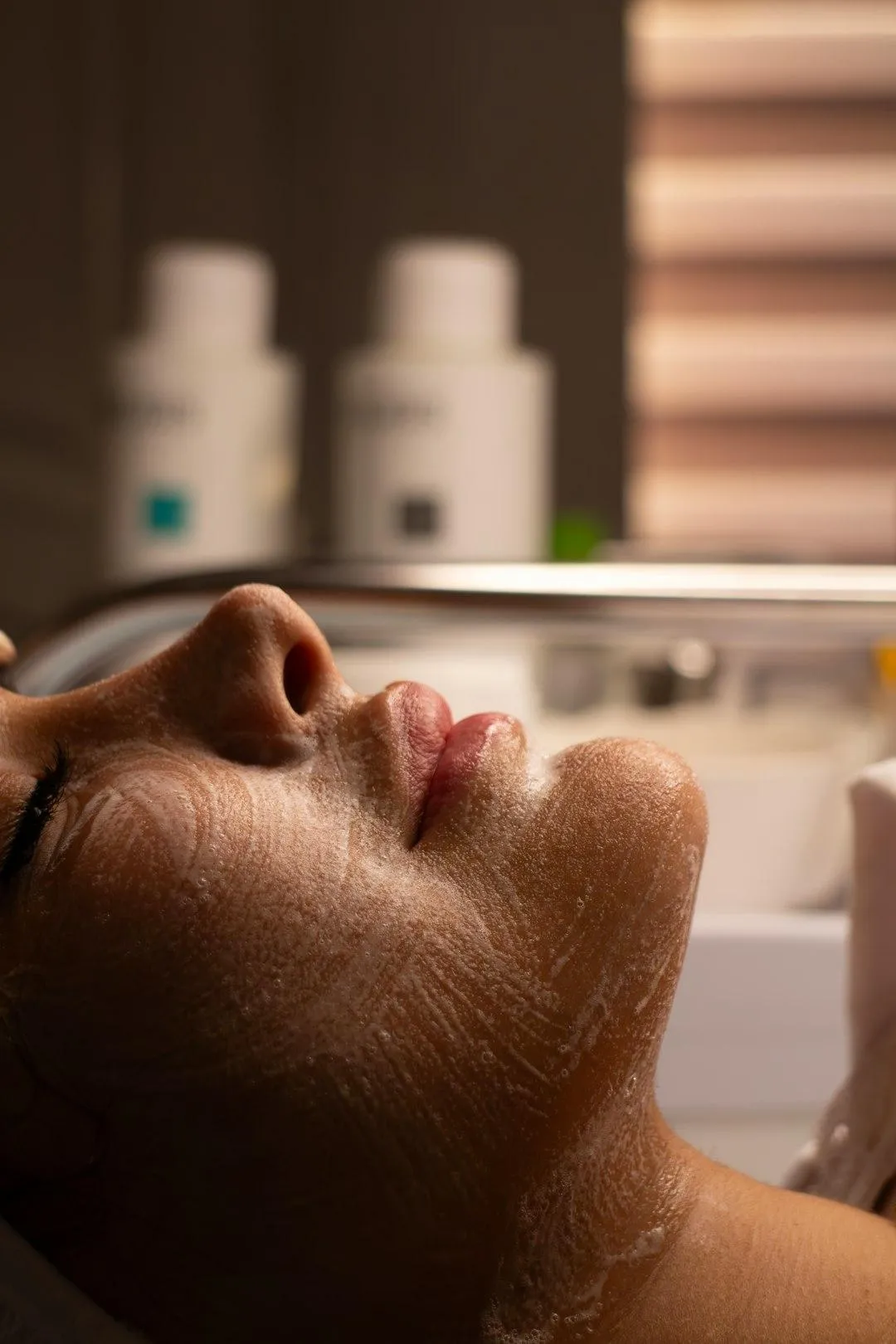
Microcurrent Facial Before After: 7 Real Examples & Results
Microcurrent Facial Before After: 7 Real Examples & Results
Tired of Filtered Faces? Let's See Real Microcurrent Results
Searching for microcurrent facial before after photos can feel like sorting through polished marketing instead of useful evidence. Which results are genuine, which are angle-dependent, and what can you realistically expect from your own skin?
As a corrective skincare specialist serving Greenwood, Indiana, and the Indianapolis area, I prefer a more practical approach. Microcurrent isn't a magic wand. It's a treatment method that works best when facial anatomy, treatment frequency, and device strength all match the goal.
That matters because a lifted brow, softer jawline, or firmer cheek doesn't come from one flattering photo. It comes from muscle re-education, disciplined technique, and a realistic plan for maintenance. In this guide, you'll see how to evaluate before and after photos with a more trained eye, where at-home tools fit, and why professional treatment can look very different from DIY toning.
We'll start with the standard I trust most in practice. A structured professional series.
1. Case Study Professional NeurotriS Series at A Touch of Claridy

What should you trust more. A dramatic one-day lift, or a documented series that shows how the face changes over time?
For a real-world starting point, I look at professional NeurotriS work from our Greenwood studio. It gives clients a better standard for reading microcurrent facial before-and-after images. Instead of relying on curated marketing shots, they can see what happens when treatment frequency, muscle mapping, and follow-through are handled professionally.
NeurotriS is the type of system I reach for when the goal is muscle re-education, not a temporary post-facial perk. It is especially helpful for clients dealing with jawline softening, cheek descent, brow heaviness, or visible asymmetry that skincare alone will not correct.
What a professional series does differently
Professional microcurrent is technique-driven. Electrode placement matters. Direction matters. Hold time matters. Pressure matters too, because too much pressure can flatten the work while too little can reduce contact and precision.
A 2024 study published in the Journal of Cosmetic Dermatology examined a microcurrent-based home NMES device used five times weekly for 12 weeks and found significantly better aesthetic improvement in the treatment group than in the control group, along with reported gains in gloss and wrinkle appearance at follow-up points. The authors also noted 80% of subjects reporting positive effects. That finding lines up with what experienced estheticians see in practice. Repetition changes outcomes.
Practical rule: Treat a full-series after photo very differently from an after photo taken right after one appointment.
In clinic, that usually looks like steadier contour changes, better facial balance, and more durable improvement when a client keeps the schedule and uses the recommended homecare. A single treatment can create a fresher look for an event. A series is what I use for correction. Clients searching for corrective facials in Indianapolis usually get better results when they understand that difference before they book.
Who this is best for
Professional NeurotriS makes the most sense for clients who want natural-looking lift and are willing to commit to a plan.
Best for visible laxity: Lower-face heaviness, early jowling, and tired contours usually respond better to a structured in-office series than to occasional home use.
Best for asymmetry or pattern-specific concerns: A professional session allows targeted work on individual muscle groups instead of a generalized pass over the whole face.
Best for clients comparing before-and-after photos critically: A series like this helps you judge timing, consistency, and whether the result reflects true muscle work or short-term puff reduction.
There are real trade-offs. Professional treatment costs more than home devices, requires regular appointments, and works best for clients close enough to Greenwood or Indianapolis to stay consistent. For clients who want meaningful contour change, though, professional microcurrent still sets the benchmark that at-home tools are trying to approximate.
2. NeurotriS The Professionals Perspective

The NeurotriS before and after gallery is useful because it reflects how licensed professionals think about results. Not all changes appear at once. Good microcurrent work tends to build gradually across a planned series.
That alone makes this gallery more educational than many beauty-brand images. You can often see progression instead of a dramatic one-time reveal. For anyone comparing providers in Greenwood, Indianapolis, or beyond, that's a healthy standard.
What to notice in the photo series
Look at whether the images show more than baseline and final outcome. Progressive images usually signal a more honest conversation about time, repetition, and cumulative lift.
NeurotriS also helps illustrate a point many clients miss. Professional microcurrent isn't interchangeable with consumer devices. The treatment environment, operator skill, and protocol structure all affect the outcome.
The best before and after photos don't just show improvement. They show how improvement built over time.
A few practical pros and cons stand out:
Strong for expectation-setting: The gallery supports a multi-session mindset rather than promising instant correction.
Strong for licensed use: The platform is built for in-studio treatment protocols.
Less useful for shoppers wanting a DIY purchase: This isn't positioned for direct consumer use.
Requires scheduling discipline: Results rely on repeat appointments, not occasional use.
If you want the clearest example of pro-grade lifting logic, NeurotriS is one of the most instructive references available.
3. NuFACE Setting At-Home Expectations

NuFACE Microcurrent 101 is one of the most familiar entry points for people considering at-home microcurrent. I like it for one reason. It teaches users that home devices only make sense when used consistently.
The brand's own guidance specifies a starting routine of 5 minutes a day, 5 days a week for 60 days, but the same brand material leaves a real question unanswered: what maintenance looks like after that initial period. That long-term gap matters, especially for clients who want lasting contour support rather than a short sprint.
Where home devices fit best
At-home tools are best viewed as maintenance, habit-based toning, or a lower-commitment starting point. They can support the brow, cheek, and jawline, but users need to be realistic. Home results are usually subtler than professional muscle re-education.
That's why I often see the best outcomes when clients use a home tool between professional appointments rather than instead of them. If you're reading reviews and wondering what sustained compliance looks like in real life, A Touch of Claridy's client reviews page gives a better feel for how personalized guidance supports consistency.
Good fit for disciplined users: If you commit to regular use, a home device can earn its place.
Less ideal for advanced laxity: More visible contour loss often needs stronger in-studio strategy.
Important limitation: Maintenance guidance after the initial build phase isn't always clearly defined in consumer education.
NuFACE remains a solid example of what home microcurrent can do when expectations are set properly. It shouldn't be judged by professional standards, and it shouldn't be sold as if it's the same thing.
4. ZIIP Beauty The Role of Guided Routines

With ZIIP Beauty, the most interesting feature isn't only the device. It's the guided routine model. That matters because technique is where many home users lose results without realizing it.
A person can own a well-known device and still underperform by moving too fast, skipping conductive product, or failing to follow the same pattern each time. ZIIP's app-guided structure helps reduce that problem.
Why guidance improves consistency
Microcurrent responds well to repetition and method. Guided routines make it easier to keep treatment time, movement pattern, and goal area more consistent from session to session.
That's important when evaluating before and after images. If a brand pairs device use with a repeatable routine, the photos become more believable because the process itself is more standardized.
Correct technique is part of the treatment. A device can't compensate for inconsistent use.
ZIIP's strengths and trade-offs are fairly clear:
Helpful for routine adherence: Guided programs reduce guesswork for first-time users.
Useful for targeted goals: App-based options can support different concerns like lift or clarity.
Requires commitment: If users don't follow the routine, results become harder to reproduce.
Worth vetting independently: Customer experience can vary, so buyers should read broadly before purchasing.
For people who like structure, ZIIP makes more sense than a device that leaves all technique up to the user.
5. 7E Wellness MyoLift Bridging Pro and Home Use

7E Wellness MyoLift results are useful because they sit in the middle ground between consumer curiosity and professional education. The brand offers both home and pro devices, which makes its gallery a good lesson in comparison.
The catch is simple. You have to check which device produced the image you're studying. Otherwise, people compare a professional outcome to a home-use budget and leave disappointed.
How to compare results fairly
If you're looking at a MyoLift Mini result and a professional MD result, those shouldn't be treated as equivalent examples. The category overlap can blur expectations if you don't read carefully.
That doesn't make the gallery misleading. It just means the viewer has to do more work. In a treatment room, that distinction is easy to explain. Online, many people miss it.
A few practical takeaways:
Strong educational ecosystem: The brand supports both estheticians and motivated home users.
Good for protocol-minded shoppers: Published routines help people use the device more accurately.
Potential confusion in galleries: Mixed device categories can lead to unrealistic comparisons.
Better for informed buyers: This platform rewards users who read the details, not just the headline image.
For clients deciding between in-studio care and DIY maintenance, 7E Wellness is one of the clearest reminders that device class matters.
6. FOREO BEAR The Importance of Safety and Technique

FOREO BEAR is a good example of how safety education shapes user experience. A lot of people focus on the promise of a lifted look and ignore the basics that make the treatment tolerable and effective.
Microcurrent uses electrical energy. That doesn't make it frightening, but it does mean proper setup matters. Conductive product, correct contact, and device instructions aren't optional extras.
What not to skip
The biggest beginner errors are usually simple. People rush application, use the wrong slip product, or assume discomfort is normal. It isn't.
FOREO stands out because its education emphasizes correct use and safety support. That's valuable for first-time users who need clear onboarding. For clients interested in broader non-surgical contour support, A Touch of Claridy also offers body and face contouring services that can be paired thoughtfully with facial rejuvenation goals.
Best feature: Safety-forward education lowers the risk of poor first experiences.
Good for accessibility: It's a recognizable brand with broad availability.
Main drawback: Some before and after content appears in editorial-style formats rather than a tightly controlled clinical gallery.
Best mindset: Use brand education as a starting point, then compare against real-world feedback.
Safety doesn't create the headline result, but it often decides whether someone sticks with microcurrent long enough to get one.
7. Clareblend MINI Highlighting Realistic Timelines

Clareblend MINI is a strong reality check for anyone expecting dramatic overnight lifting from a home device. The photos associated with this tool usually show modest, natural-looking changes that develop with steady use.
I consider that a strength. Subtle, believable progress is easier to trust than a gallery full of overly polished instant transformations.
Why subtle results still matter
A gentler timeline helps users judge microcurrent more fairly. When the change is small but visible, it often reflects what many home users can reproduce with patience and good technique.
That also fits the broader truth seen in published case discussions of microcurrent. Consistent use is what moves the needle, whether the goal is improved jawline definition, softer nasolabial folds, or a fresher overall expression.
If a home device gives you gradual, repeatable improvement, that's success. It doesn't need to mimic a procedure to be worthwhile.
Clareblend MINI makes sense for users who want:
A realistic entry point: Good for people new to microcurrent.
Natural-looking change: Results tend to look understated instead of abrupt.
Clear usage support: Helpful for avoiding common beginner mistakes.
Measured expectations: Photos aren't standardized like a clinical trial, so consistency still drives the outcome.
For many people, this kind of gallery is the most honest place to start.
Microcurrent Facial Before & After: 7-Case Comparison
Treatment Implementation Complexity 🔄 Resource Requirements ⚡ Expected Outcomes ⭐📊 Ideal Use Cases 💡 Key Advantages Case Study: Professional NeurotriS Series at A Touch of Claridy High, licensed provider, 10–12 session protocol Clinic-grade NeurotriS device, trained esthetician, multi-visit commitment Significant, cumulative lift and texture improvement ⭐⭐⭐⭐ 📊 High Clients seeking long-term regenerative correction of laxity Deep muscle re‑education, personalized plan, documented studio results NeurotriS: The Professional's Perspective High, professional-only protocols and training Clinic purchase, licensed staff, training materials Progressive, predictable multi‑session changes ⭐⭐⭐⭐ 📊 High Clinics educating patients and delivering pro-grade treatments Pro power, clear before/after series for expectation setting NuFACE: Setting At-Home Expectations Low, short daily routines but needs discipline Consumer device, conductive gel, daily 5‑min commitment Subtle, maintenance-focused lift with consistent use ⭐⭐ 📊 Moderate At‑home maintenance between professional sessions Accessible, large user base and community feedback ZIIP Beauty: The Role of Guided Routines Moderate, app-guided technique improves consistency Device + app, conductive gel, adherence to guided protocols More reproducible results if protocols followed ⭐⭐⭐ 📊 Moderate–High Users who benefit from step-by-step routines and tech guidance App standardization of technique, diverse targeted routines 7E Wellness (MyoLift): Bridging Pro and Home Use Variable, depends on model (mini → MD) Range from low-cost home units to professional systems Varies by model; pro devices yield stronger outcomes ⭐⭐⭐📊 Variable Users wanting upgrade path or clinics offering both options Full lineup, esthetician resources, true microcurrent positioning FOREO BEAR: The Importance of Safety and Technique Moderate, emphasis on safe operation and modes Device with safety systems, conductive serum, manuals Safe, reliable results when used correctly ⭐⭐⭐ 📊 Moderate Safety-conscious beginners and editorial/test trial contexts Anti‑Shock System, strong safety docs and broad support Clareblend MINI: Highlighting Realistic Timelines Low, simple home device and short routines Retail/esthetician support, device, consistent use Modest, natural changes over days–weeks ⭐⭐ 📊 Low–Moderate First‑time users seeking realistic, subtle improvements Realistic timelines, good esthetician‑led education
Your Next Steps for a Natural Lift in Indianapolis
Understanding microcurrent facial before after results starts with one simple distinction. Professional treatment and at-home maintenance are not the same category.
At-home devices can be helpful. They support routine, they encourage consistency, and they can maintain momentum between appointments. But if the goal is deeper muscle re-education, more visible lifting, and a customized strategy for facial contour, professional-grade treatment is the stronger path.
That difference is especially important when you're comparing photos online. Many images look impressive until you ask better questions about timing, device strength, and protocol.
Tips for Reading Before/After Photos:
Check the lighting: The strongest comparisons use similar lighting, angle, and facial expression.
Look at the timeline: A same-day lift and a full-series result should never be interpreted the same way.
Note the device: Professional equipment and at-home tools create different categories of outcome.
Watch for tension in the face: Raised brows or tightened lips can fake improvement in a photo.
For clients in Greenwood, Indiana, and the Indianapolis area, personalized care is paramount. A face with early loss of tone needs a different plan than a face with more advanced laxity, asymmetry, or fatigue in the lower third. Corrective skincare works better when the treatment fits the anatomy instead of copying a generic online routine.
Frequently Asked Questions FAQs
How many microcurrent sessions do I need to see results
You may notice a temporary lift after one treatment, but lasting visible change usually comes from a series. In practice, professional NeurotriS work is often structured across multiple appointments, then followed by maintenance based on the client's response and goals.
Is microcurrent better than Botox
They do different jobs. Botox reduces movement in targeted muscles, while microcurrent focuses on toning and retraining muscles for a lifted appearance. Clients who want a non-invasive, regenerative option often prefer microcurrent because it supports a more natural-looking result.
Does microcurrent hurt
It shouldn't. Typically, very little is felt, or mild tingling or light muscle activity may be noticed. If a treatment feels sharp or unpleasant, the setup, conductivity, or technique usually needs adjustment.
How long do microcurrent results last
Results last best when maintenance is built into the plan. Brand education often stresses ongoing consistency, and that's true in practice as well. After the initial improvement phase, regular upkeep helps preserve lift and tone.
Start Your Transformation in Greenwood IN
If you're looking for non-invasive anti-aging treatment in Greenwood or Indianapolis, microcurrent can be a smart option when it's done with clear goals and realistic expectations. A Touch of Claridy approaches it as part of a broader corrective skincare plan, not a one-off beauty trend.
That means looking at your skin, muscle tone, lifestyle, and long-term goals before deciding what belongs in your treatment plan. Some clients do best with a professional microcurrent series. Others benefit from combining microcurrent with different advanced modalities and curated homecare.
If you want natural-looking lift, firmer contours, and a more informed path forward, book a consultation and get a plan built around your face, not just a device.
Internal link suggestions: add links to the main NeurotriS service page, the About Clara page, and a blog post about non-invasive anti-aging solutions.
Ready for your own microcurrent facial before after story? A Touch of Claridy offers personalized corrective skincare in Greenwood, Indiana for clients throughout Indianapolis and the surrounding area. Book your consultation to explore NeurotriS microcurrent and a treatment plan designed for natural lift, firmer contours, and long-term skin health.


Licensed esthetician
Clara D-Smith
About Clara
Let me introduce myself if you don't know me, I'm Clara. Wife, mom, aesthetician, makeup artist (special Occasion and permanent), and business owner.
Married to a wonderful man named Michael whose blessed me with three beautiful children! Elijah, Micaiah and Eliana. Yes busy, but joyfully loving Life...in abundance.
Always being attracted to beauty and color, I love anything that allows me to be creative, help others and shine! So, let me help YOU shine with almost 20 years of experience in beauty, skincare, makeup and anything I like to "touch".
#atouchofclaridy
of Indianapolis is here for you!
Contact Us
We'd Love To Hear From You

Copyright 2025 A Touch of Claridy