




A Touch of Claridy
Discover Radiant Beauty at A Touch of Claridy Indianapolis
LED Light Therapy Benefits for Skin: Renew Your Glow
LED Light Therapy Benefits for Skin: Renew Your Glow
If you're reading this, there's a good chance you've already done the usual cycle. You bought the serum with glowing reviews. You tried the acne spot treatment, the retinol, the brightening mask, the “gentle” exfoliant that still left your skin irritated. Maybe your breakouts calmed down for a week, then came back. Maybe your skin looked smoother for a few days, then slipped right back into dullness, redness, or uneven texture.
That frustration is common for clients across Greenwood, Indiana and the Indianapolis area. Many individuals are not lazy with skincare. They are overwhelmed by options and stuck with products that promise a lot but do not address how skin repairs itself.
led light therapy benefits for skin start to make sense in this context. LED treatment isn't a harsh peel, an injectable, or a trend that depends on downtime to feel effective. It's a non-invasive treatment that supports the skin's own repair process. Used correctly, it can help calm acne, support collagen production, reduce visible redness, and improve recovery after more advanced corrective treatments.
What matters is how it's used, how often it's used, and whether the device has enough power to do more than create a pretty glow. That's the part many people in the Indianapolis market aren't told clearly enough.
Tired of Skin Concerns That Will Not Go Away
Some skin issues don't respond well to random product swapping. Acne that keeps returning, redness that lingers, fine lines that seem sharper when your skin is dehydrated, post-breakout marks that refuse to fade. Those concerns usually need a plan, not another impulse purchase.
A lot of clients arrive with the same story. They want clearer skin, but they also don't want aggressive treatments that leave them peeling for days. Or they want anti-aging support, but injectables and surgery don't feel like the right fit. They want something that looks natural, feels safe, and works with real life.
That's why LED therapy has become such a valuable option in corrective skincare. It gives the skin support without creating the kind of trauma that makes many people nervous about advanced treatments. For adults with acne, early laxity, inflammation, or a tired-looking complexion, that matters.
Practical rule:If your skin is reactive, inconsistent, or slow to recover, gentler does not mean weaker. Sometimes it means smarter.
The bigger truth is this. LED isn't a miracle on its own. It works best when it's chosen for the right concern, delivered at the right intensity, and built into a long-term plan. That's especially important if you're comparing a quick online purchase to professional skincare in Greenwood or Indianapolis.
For people who are tired of wasting time and money, the appeal is simple:
• It is non-invasive:No needles, no peeling phase, no forced downtime.
• It supports correction:It can be used for acne, visible signs of aging, and post-treatment recovery.
• It fits real schedules:Many people can add it to facials or pair it with a broader regimen.
• It rewards consistency:Skin responds better when treatment is regular and targeted.
When clients ask whether LED is worth trying, the answer depends on one thing. Are you looking for a novelty device, or are you ready for a skin strategy that respects biology?
How LED Light Therapy Works Its Magic on Your Skin
It starts with light, not heat
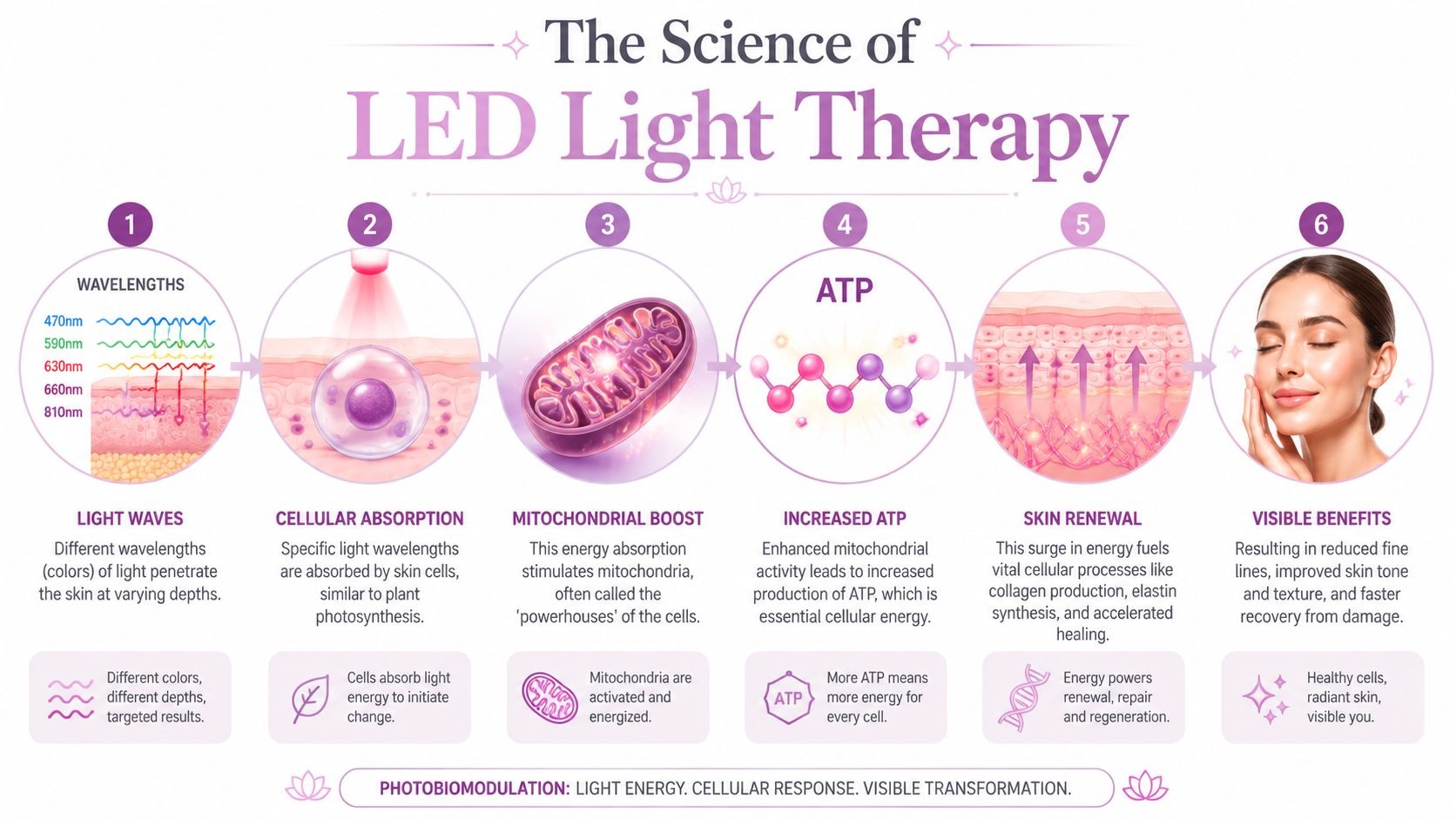
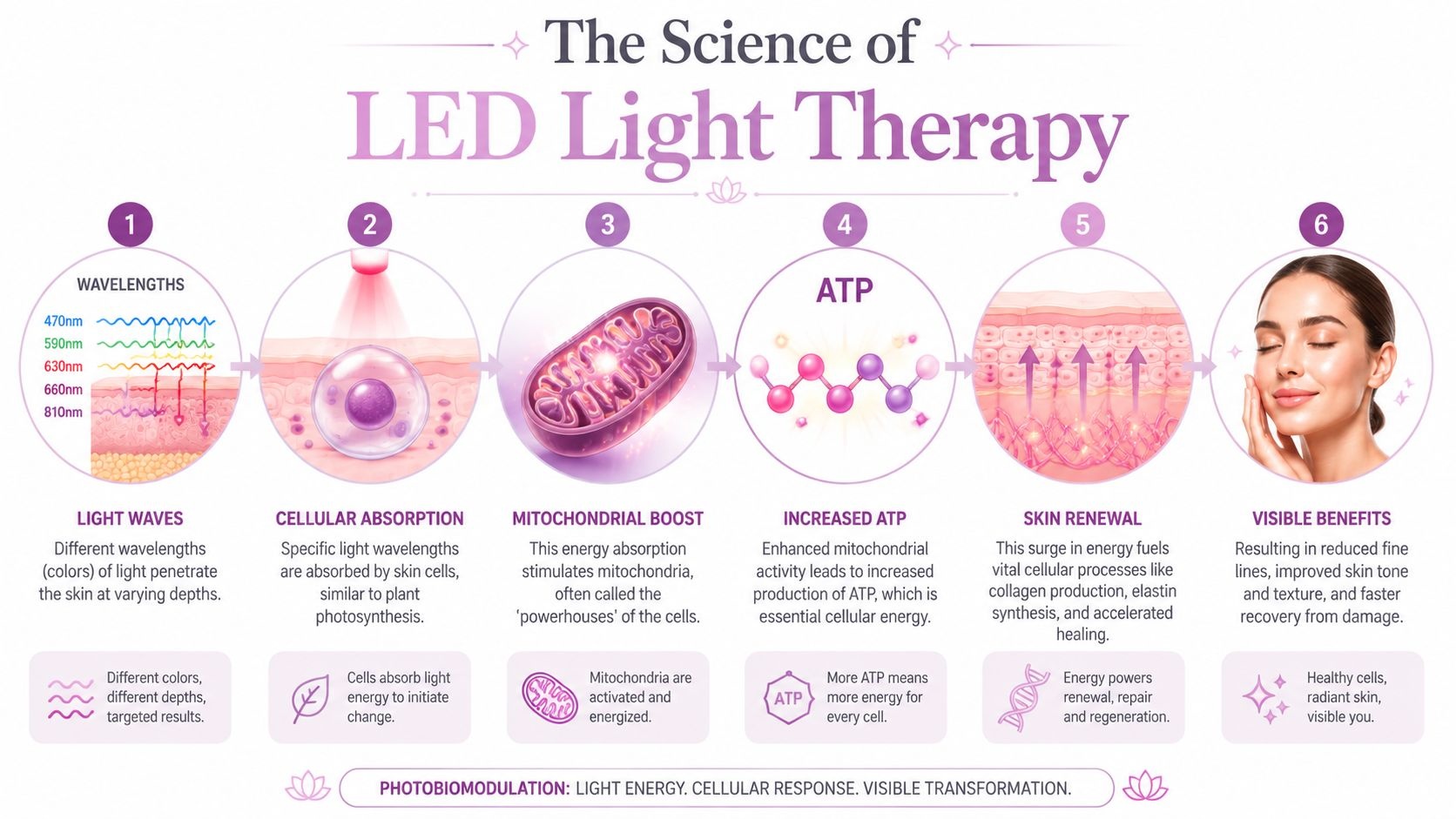
LED light therapy works through photobiomodulation, which sounds technical but is easier to understand than expected. Think of it as photosynthesis for your skin. Your skin cells absorb specific wavelengths of light and use that energy to function better.
Unlike treatments that rely on injury or heat, LED doesn't force the skin into repair mode by damaging it first. It delivers light at specific wavelengths so the skin can convert that light into usable cellular energy. According to Baylor College of Medicine's explanation of LED light therapy and ATP production, LED light therapy stimulates adenosine triphosphate or ATP, which directly enhances skin repair and collagen synthesis, and in-office treatments can support recovery with approximately 50% faster resolution of edema and erythema.
Your cells turn light into usable energy
That ATP piece is the key. ATP is the energy currency your cells use to carry out repair work. When skin has more usable energy, it can do more of the jobs you want it to do well.
That includes:
• Repairing stressed skin:Cells recover more efficiently after irritation or advanced treatments.
• Supporting collagen activity:Red light reaches the mid-dermis, where fibroblasts are active.
• Calming inflammatory pathways:Less inflammation helps the skin recover in a more balanced way.
• Improving overall skin function:Better cellular performance usually shows up as smoother, calmer, healthier-looking skin.
This is why LED often feels deceptively simple. You lie under a panel, rest, and leave without the drama people expect from a “results-driven” treatment. But under the surface, your cells are doing work.
LED isn't skin decoration. It's energy support for tissue that has to heal, renew, and defend itself every day.
For corrective skincare, that matters because many common concerns are tied to sluggish repair, chronic inflammation, or repeated cycles of damage. Acne lesions take longer to settle. Redness hangs around. Fine lines look more obvious when collagen support isn't keeping pace. Recovery after more advanced services can stretch out longer than necessary.
LED helps by improving the environment your skin cells work in. That's why it makes sense not only as a standalone option, but also as part of a professional treatment plan for clients in Greenwood and the greater Indianapolis area who want visible improvement without aggressive downtime.
A Spectrum of Solutions LED Colors and Their Benefits
Different wavelengths perform distinct roles. This is a primary reason why professional LED treatment is effective. The color serves a functional purpose, indicating the level at which the light penetrates and the specific skin concern it addresses.
Red light for collagen support and rejuvenation
Red LED is the wavelength people usually ask about first, especially if their concerns are fine lines, dullness, recovery, or early skin laxity. Research summarized inthis review of red and blue LED therapy for dermatologic usenotes thatred light in the 600 to 700 nm rangepenetrates to the dermal layer and stimulates fibroblasts, the cells involved in collagen and elastin production. That same body of evidence also shows wavelength-specific benefits, withblue LED at 405 nm reducing acne lesions by 71.4% in four weeksin one study.
For red light, the practical takeaways are clear:
• Collagen support:Red light targets the layer where fibroblasts live.
• Smoother-looking texture:Skin often appears less rough and less tired over time.
• Better support for photoaging concerns:It addresses processes tied to visible aging rather than masking them.
• Useful after advanced services: It can help skin recover more comfortably when used within a treatment plan. If your goal is a fresher, firmer look without injectables, red light belongs in the conversation.
Blue light for acne-prone skin
Blue LED is more targeted. It is most useful when acne is part of the picture, especially inflammatory breakouts that keep cycling through the same zones of the face.
Blue light is valuable because it targets acne-causing Propionibacterium acnes bacteria. That makes it very different from a harsh scrub, drying toner, or random overuse of active ingredients. The goal isn't to strip the skin. The goal is to reduce one of the drivers behind recurring breakouts.
Blue LED may be a strong fit if you deal with:
• Persistent breakouts on the cheeks, chin, or jaw
• Surface-level acne that flares with stress or hormones
• Skin that is both acne-prone and sensitive
• Post-breakout irritation from over-treating at home
For many acne clients, the phrase led light therapy benefits for skin stops sounding vague and starts sounding practical at this point.
What about other colors
You'll see green, yellow, purple, and mixed-light claims online. Some devices use those colors in preset programs, and some brands market them heavily. The problem is that most consumer education around those shades is much stronger than the evidence people are shown.
In practice, the most evidence-backed conversation still centers onred and blue. Those are the wavelengths with the clearest roles in acne support, skin repair, and visible rejuvenation based on the verified clinical material available here. If someone is selling a rainbow of promises without explaining treatment goals, intensity, timing, and skin condition, that's a red flag.
More colors don't automatically mean better treatment. The right wavelength for the right concern matters more than novelty.
Here is a quick reference table.
Light Color
Primary Benefit
Best For
Red
Collagen and elastin support, skin rejuvenation
Fine lines, photoaging, dullness, recovery support
Blue
Targets acne-causing bacteria
Mild to moderate acne, inflammatory breakouts
For clients in Indianapolis and Greenwood, the useful question isn't “Which color sounds good?” It's “Which wavelength matches what my skin needs right now?”
Professional vs At-Home LED Therapy Why Your Results Depend On It
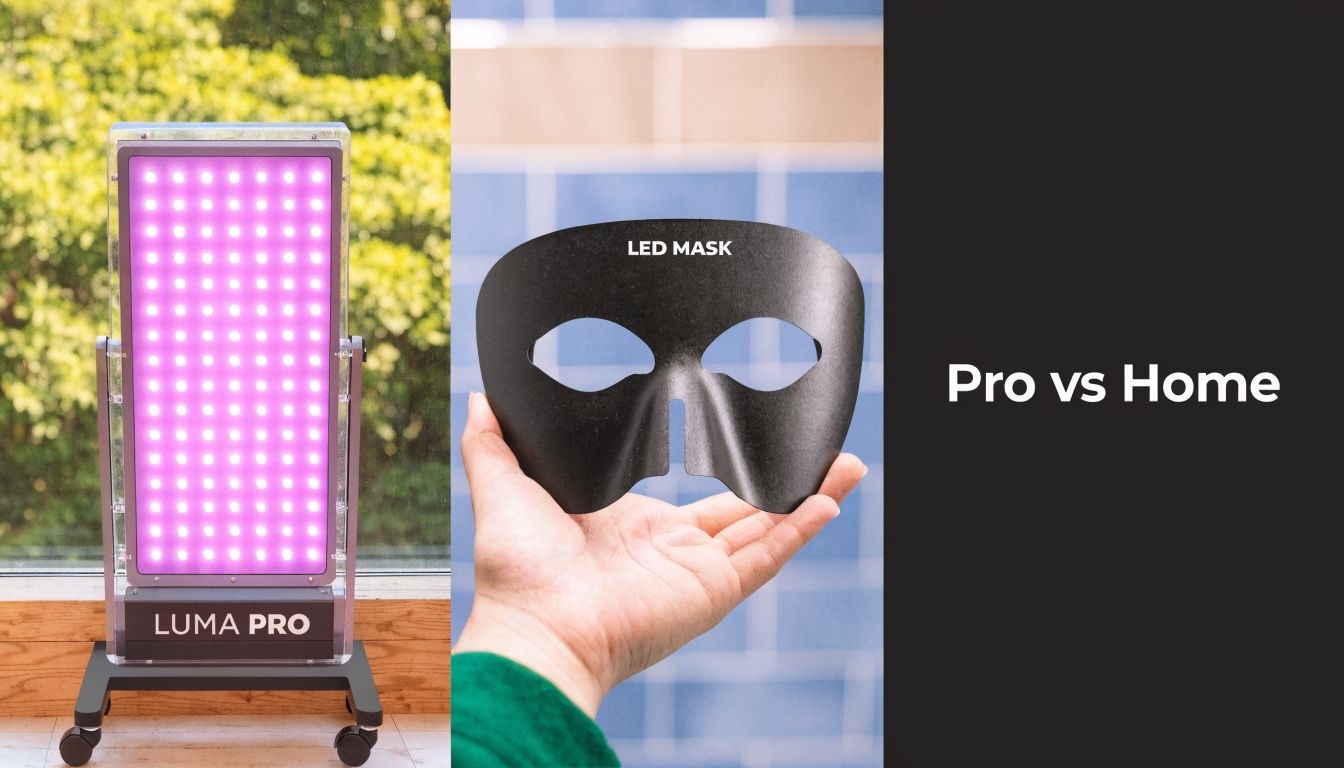
The biggest misunderstanding around LED is that all devices are basically the same. They aren't. That's where many people lose months chasing “consistency” with a tool that was never strong enough to create meaningful corrective change.
Why clinic devices perform differently
The issue isn't just convenience. It is power, treatment control, and clinical intent. According toCleveland Clinic's overview of LED light therapy and device differences, over 90% of patients in a study using professional-grade red light reported noticeable improvement in texture and dark spots after 8 sessions, while experts note that at-home devices are far less powerful and users will likely only experience "subtle improvements”.
That distinction matters if your goals are corrective rather than casual.
Professional treatment usually offers advantages like:
• Stronger output: In-office systems are designed to do more than create a mild cosmetic effect.
• Better matching of wavelength to concern: Acne and aging don't need the same approach.
• More precise treatment planning: Frequency, sequencing, and combination with other services matter.
• Better safety screening: Contraindications and skin sensitivity need real judgment.
If you're comparing options, review the studio's professional skincare services in Greenwood and Indianapolis and ask how LED is integrated, not just whether it is offered.
What home devices can and cannot do
Home masks aren't useless. They can be a maintenance tool for some people, especially if expectations are realistic. The problem is that the marketing often suggests they can replace in-office care.
They usually can't.
A home device may make sense if you want a gentle add-on and you're willing to accept gradual, limited change. It makes less sense if you're trying to address acne that isn't clearing, texture that has become stubborn, or visible signs of aging that need a more corrective plan.
A professional device is also more practical when your skin is already dealing with multiple concerns at once. Many adults in the Indianapolis area aren't choosing between acne or aging. They're dealing with both, plus sensitivity, post-inflammatory marks, or slow healing.
Here is the trade-off in plain terms:
• Home LED: Lower commitment in the short term, lower intensity, subtler outcome.
• Professional LED: Higher clinical value, stronger results potential, better for structured correction.
That doesn't make home care irrelevant. It just puts it in the right category. Supportive, not equivalent.
How LED Therapy Complements Your Corrective Skincare Plan
LED works well on its own, but it becomes much more valuable when it's used as part of a larger corrective strategy. Skin rarely has just one issue. A client may need support for breakouts, barrier repair, early laxity, and post-inflammatory marks all at once.
Where LED fits in a real treatment plan
LED moves beyond being a trend, establishing itself as a cornerstone. It can be placed before, after, or between other services depending on what the skin needs.
A few common examples include:
• After microchanneling: LED can help calm the skin after treatment. For readers exploring that option , AnteAGE microchanneling treatments are one example of a service that may be paired with post-treatment skin support.
• Alongside microcurrent: Clients focused on tone and lift often benefit from support that also helps skin quality.
• During corrective facials: LED can reinforce a plan built around hydration, calming inflammation, and barrier support.
• Between stronger services: It gives the skin a way to recover without adding more stress.
Why pairing treatments often works better
A single tool rarely does everything well. That's true in skincare, even when the technology is excellent. LED supports cellular energy and repair. Microchanneling stimulates renewal through controlled pathways. Microcurrent focuses on facial muscle and circulation. Those are different jobs.
Used together thoughtfully, they can create a more coherent result than chasing one treatment after another without a plan.
Good corrective skincare isn't about doing the most. It's about choosing modalities that don't compete with each other.
This is also where personalized care matters. Some clients need inflammation control first. Others need acne reduction first, then texture work later. Some need a simpler routine because their homecare is overcomplicated and reactive.
In a professional setting, LED can be adjusted to fit the skin in front of you, not the trend someone is selling online. That makes it particularly useful for adults who want natural-looking improvement and a long-term path, not a quick fix that fades as soon as the novelty does.
One option in the Greenwood market is A Touch of Claridy, where LED is used within broader regenerative and corrective skincare services rather than treated as a gimmick or a one-off add-on.
What to Expect During Your LED Treatment in Greenwood
A first LED appointment is usually much easier than people expect. There is no scraping, no harsh sensation, and no “beauty has to hurt” moment. Most clients find it very relaxing.
Before the light turns on
The visit should start with a conversation about your skin, not with a device pointed at your face. A good treatment plan considers your current concerns, recent procedures, active products, sensitivity level, and whether acne, redness, aging, or recovery is the main priority.
If you're exploring options beyond LED alone, many clients begin with custom facial treatments in the Indianapolis area so the skin can be assessed properly and treated more strategically.
You may be asked about things like light sensitivity, certain medications, or conditions that make LED inappropriate. That part matters. Safe skincare isn't casual.
During and after the session
Once treatment begins, you'll lie comfortably while the panel is positioned over the treatment area. The light is bright, but the process itself is typically painless. The experience is generally considered calm and easy to tolerate.
Afterward, there usually isn't downtime in the dramatic sense people associate with more aggressive treatments. Skin may feel settled, supported, and a bit fresher. That makes LED especially appealing for busy clients in Greenwood who want results-driven care that doesn't disrupt the rest of the day.
A realistic mindset helps:
• Come in with a goal: Acne support, rejuvenation, or post-treatment recovery.
• Expect a series, not a miracle: Results build with consistency.
• Follow your homecare plan: Professional treatment works better when daily habits support it.
• Ask about pairing: LED may be more effective when built into a larger corrective routine.
Frequently Asked Questions About LED Light Therapy
Is LED light therapy safe for sensitive skin
In general, LED photobiomodulation is considered very safe when used appropriately. A review covering clinical use reports that LED is exceptionally safe, and it also noted progressive improvements in skin quality that lasted for a month after discontinuing treatment in one study, supporting the idea that the effects are cumulative rather than purely temporary. The same review reported an81% reduction in lesions by twelve weeks for acne patients using combined red and blue light after dermabrasion, as described in this clinical review of LED photobiomodulation outcomes.
Sensitive skin still needs screening. “Safe” doesn't mean “one-size-fits-all.” Current products, skin condition, and medical history all matter.
How many sessions will I need?
There isn't one answer for everyone. Acne, post-treatment healing, and anti-aging goals don't respond on the same timeline. What matters most is consistency and using the right wavelength for the right concern.
For many clients, LED works best as a series followed by maintenance rather than a single appointment. If someone promises instant transformation from one session, that's a sign to slow down and ask better questions.
Can LED be combined with other skincare treatments?
Yes, often very well. LED is commonly used to support recovery and calm the skin after other corrective services. It can also be worked into facials or longer treatment plans where inflammation control and skin resilience are priorities.
If you use prescription topicals, have recently had another procedure, or are planning injectables, bring that up before treatment. The goal is to sequence your care intelligently so your skin gets the benefit without unnecessary stress.
Does LED light therapy hurt?
No, it usually doesn't. The treatment is typically experienced as comfortable and restful. The bigger challenge is patience, not pain. Because the treatment is gentle, some people underestimate how powerful cumulative care can be.
Is LED enough by itself?
Sometimes. Often, no. It depends on the severity of the concern, the quality of the device, and whether your homecare supports what the treatment is trying to do.
If your skin has been stuck for a while, a more complete corrective plan usually gets you farther than relying on one standalone service.
───
If you're ready for a more thoughtful approach to acne, skin rejuvenation, or corrective facials in Greenwood and the Indianapolis area, book with A Touch of Claridy. The right LED treatment should fit your skin, your goals, and your long-term plan, not just your impulse to try the latest trend.
Internal linking suggestions:
• Link “custom facials in Indianapolis” to the facials page
• Link “microchanneling for skin renewal” to the AnteAGE microchanneling page
• Link “advanced skincare services” to the services page
• Link a related blog post about microcurrent, cold plasma, acne treatments, or non-invasive anti-aging if available


Licensed esthetician
Clara D-Smith
About Clara
Let me introduce myself if you don't know me, I'm Clara. Wife, mom, aesthetician, makeup artist (special Occasion and permanent), and business owner.
Married to a wonderful man named Michael whose blessed me with three beautiful children! Elijah, Micaiah and Eliana. Yes busy, but joyfully loving Life...in abundance.
Always being attracted to beauty and color, I love anything that allows me to be creative, help others and shine! So, let me help YOU shine with almost 20 years of experience in beauty, skincare, makeup and anything I like to "touch".
#atouchofclaridy
of Indianapolis is here for you!
Contact Us
We'd Love To Hear From You

Copyright 2025 A Touch of Claridy